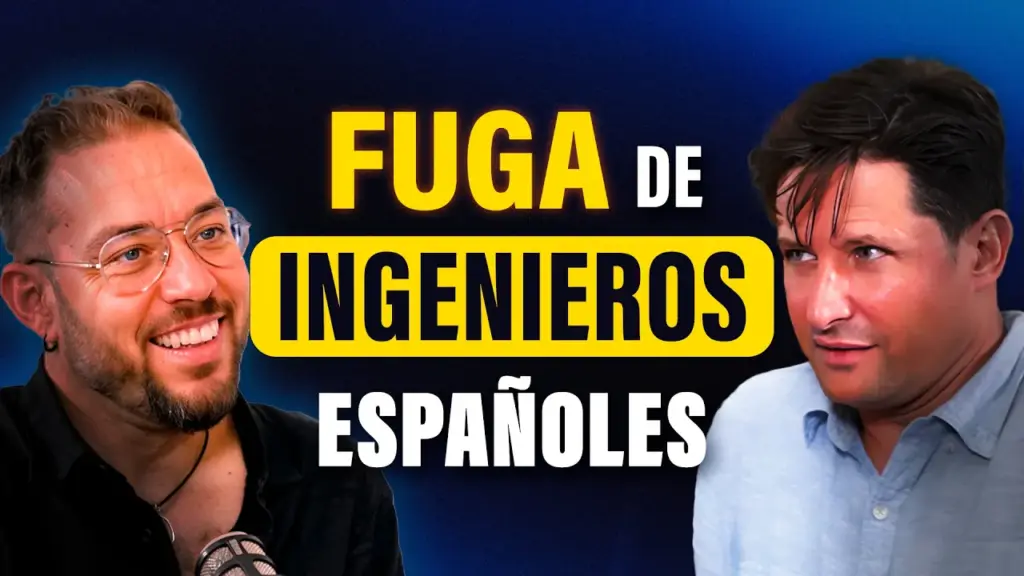
Underwater robotics combines navigation, sensors, power, and communication in an environment that necessitates a re-evaluation of many conventional terrestrial solutions. Álex Alcocer, a professor of robotics and control at OsloMet and co-founder of Syrenna, explains how research into underwater vehicles evolved into a system for ocean observation. Chapter 24 of Toque de Ingenio illustrates this transition from research to the development of a product targeted at a specific client.
Guest Álex Alcocer Company or organization: OsloMet and Syrenna.
Interview published: October 21, 2024. Episode: 24. Duration: 1 h 4 min.
In this episode:
- How do systems operating underwater acquire and transmit information?
- Why did Syrenna switch from a free vehicle to a tethered system?
- What is the cost of implementing size and weight requirements before validating whether they are actually necessary?
Designing underwater changes the project’s conditions.
Alex’s specialization began with underwater acoustic positioning and navigation. In the interview, he explains that underwater, there are fewer possibilities for communication and positioning compared to when on the surface. The system needs to estimate its location, collect data, and decide how to transmit that information to the outside world.
This difficulty means that mechanical design and electronics are closely linked. The available space, component protection, and energy all determine what a vehicle can incorporate. Choosing a sensor also requires considering its integration and how the information will be used afterwards.
The guest distinguishes tethered vehicles, known as ROVs, from autonomous vehicles without that physical connection. The choice depends on the task: inspection, intervention or collecting data during a mission. There is no single architecture for all underwater projects.
From a submarine glider to an observation system.
The origins of Syrenna lie in a research project on a submersible glider. Alex describes a vehicle that utilizes buoyancy changes and wings to move with low energy consumption. Its primary function was to measure environmental parameters of the sea.
When considering how to commercialize that technology, the team identified an operational challenge. It would be necessary to launch the vehicle, carry out its mission, and then recover it. The need for personnel and support resources limited the deployment of many units.
The opportunity wasn’t simply about improving the robot. It was about changing the way it was used. The team maintained the robot’s useful features and redesigned its mobility to reduce operational needs.
Underwater robotics designed to measure a water column.
Syrenna implemented a fixed system that moves up and down in a single location, rather than freely moving through the ocean. Alex explains that it can collect information at various depths and ascend to the surface to communicate it using mobile phone or satellite.
“We are simply obtaining information vertically”.
Álex Alcocer 47:31.
That decision illustrates a fundamental difference between benefits and utility. Having less freedom of movement can make the product more suitable for a repetitive observation task. The value lies in being able to obtain useful information through a practical operation.
The conversation also covers promotion schedules and the possibility of responding to a signal detected by a sensor. These are examples of how measurement requirements translate into decisions regarding control, autonomy, and communication.
A specific client helps to define the necessary depth.
Alex has highlighted Syrenna as a key component in offshore wind energy projects. He outlines the need for environmental monitoring before turbine installation, including observing temperature and salinity levels. He also mentions the interest of researchers in reducing the reliance on measurement campaigns conducted via ships.
The sector’s decision altered the specifications. An initial research prototype had explored greater depths, but the team found that it didn’t require maintaining that range for the market they were targeting. This highlights a potential technical capability alongside a specific commercial need.
This relationship is central to product development: Before finalizing the architecture, it’s important to define who will use the solution, what information it requires, and under what conditions. Furthermore, any additional features also require time for design, validation, and manufacturing.
The mistake of reducing the size without a sufficiently justified reason.
At the end of the interview, Alex recalled that the initial project had to be operable using drones, which imposed very strict limits on weight and volume. The team dedicated resources to reducing the size of the circuits and fitting all the systems into a compact unit.
When the application was updated, a portion of that requirement no longer needed to be fulfilled. The focus of learning is on reviewing the origin of the requirements, particularly when one of them affects the entire product.
“What the client needs”.
Álex Alcocer 1:02:39.
Edgar links this experience to the specifications phase of i-mas: writing the requirements and organizing them by priority. The team needs to differentiate between essential and desirable features, and to make the commitments between size, battery life, cost, and functionality clear.
La custom electronics and the functional prototypes allow us to explore those decisions through concrete tests. The useful question isn’t how much can be miniaturized, but what constraint the system actually needs to fulfill in order to deliver value.
From academic research to a tech company.
The conversation also covers the experience of going through a business start-up program, where Alex met his co-founders. The team needed to combine technical expertise with the organization of a company capable of growth.
The product and the company are developing with different uncertainties. Validating a physical principle does not automatically identify the buyer, and finding a market does not eliminate the integration testing requirements. Syrenna allows you to observe how both lines are adjusting throughout the process.
For other R&D projects, the case proposes a practical review: which part of the prototype demonstrates technology, and which part needs to be modified to facilitate installation, maintenance, and commercial use.
Questions about underwater robotics
How does a system that operates underwater transmit data?
In the system described by Alex, the robot ascends to the surface and utilizes either a mobile connection or a satellite. The mission, autonomy, and transmission frequency must be designed together.
Why would you want to fix a robot that was previously able to move freely?
The team was looking for a location with reduced launch and recovery requirements. The anchoring system allowed them to focus on repeated vertical measurements.
What does Syrenna teach about product specifications?
A weight, size, or depth requirement must be justified by its intended use. Maintaining a requirement inherited from research can add complexity that the client doesn’t need.
Four key takeaways from the chapter.
- The operation and maintenance are also part of the system’s design.
- A specific application helps to select sensors and features.
- The requirements should be reviewed when the target market changes.
- The prototype serves as a starting point for industrialization.
From learning to product development.
In i-mas, we connect mechanical design, electronics, and validation to develop technological products. If you’re moving a research project into a commercial application, we can help you define specifications and prepare integration tests. Tell us about your project.
You can also read. How Searebbel integrated an autopilot into a steering wheel..
Source: Original interview from Toque de Ingenio, published on YouTube on October 21, 2024. The experiences, figures, and plans discussed in the interview are relevant to that specific time. The references to i-mas services are the editorial analysis of the article.