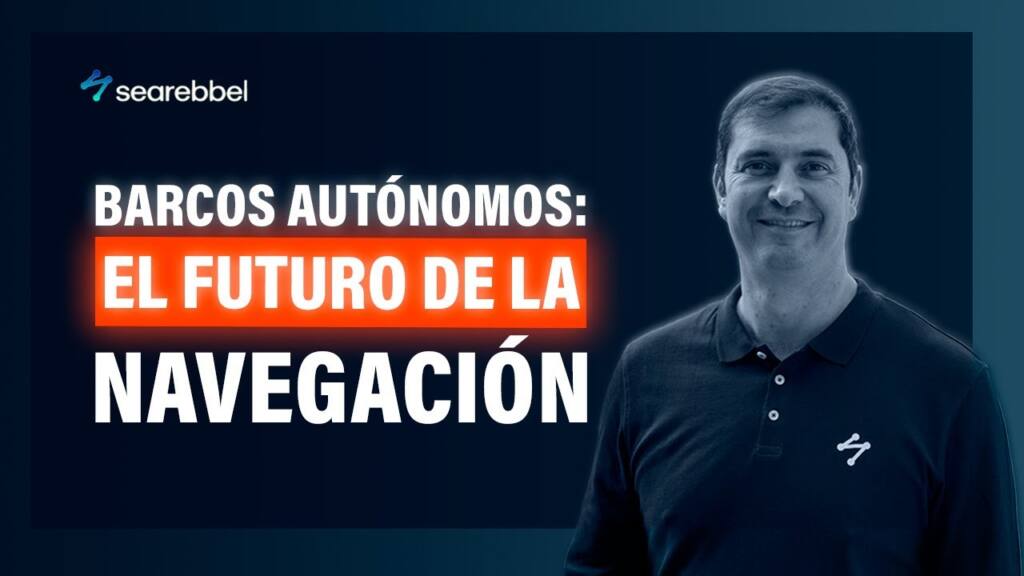
The marine product design should consider installation on board, available space, and the use of controls. Searebbel applied this approach to MobilePilot, an autopilot for boats integrated into a motorized steering system and connected to a mobile device. In Chapter 21 of “Toque de Ingenio,” Juan Herrera explains how to coordinate mechanics, electronics, and prototypes to address the challenges that arose during development.
Guest: Juan Herrera, who is introduced in the episode as the CEO of Searebbel. Interview published: September 16, 2024. Episode: 21. Duration: 1 h 27 min.
In this episode:
- How to reduce the difficulty of installing an autopilot.
- Why moving the mobile phone necessitated a review of the sensor architecture.
- What tests and manufacturing decisions preceded the initial units.
The interview was recorded on a boat in Mallorca, while the team was still preparing for the market launch. This particular moment of the project is especially valuable for observing the development decisions before they are summarized in a commercial document.
Nautical product design: start with the installation.
Juan Herrera and his partner, Carlos, came from the automotive industry and the field of autonomous driving systems. While studying recreational boating, they came across small boats whose owners continued to operate them manually, and for which implementing automation would have represented a difficult investment to justify.
In the conversation, Juan describes a conventional pilot as a collection of elements that need to be selected and installed: an actuator, a control, sensors, and an interface. Searebbel’s proposal was to intervene at a point that the user was already familiar with – the steering wheel – and to simplify what needed to be added to the boat.
The design objective was to replace the passive steering wheel with a motorized one, featuring its own power supply and connection to an application. This decision positioned the installation as a central element of the project. The team needed to determine how to integrate the system, how to power it, and how to ensure that incorporating the product wouldn’t require significant modifications to the vessel.
“Sometimes, simplifying things can actually be more complicated”.
Juan Herrera 04:35.
Here’s an example arises when discussing the removal of the original steering wheel. Exposure to the marine environment could make its removal difficult. The team designed a tool to facilitate this operation without damaging the part. The installation process began before installing the new product.
A steering wheel that was intended to remain comfortable to use.
Selecting the steering wheel as the central point of operation provided a clear direction for the project, but it also imposed a specific space and ergonomics that needed to be respected. Within this area, a motor, the control electronics, the battery, sensors, buttons, and connections had to coexist.
Each component made sense on its own. The challenge was to ensure that the entire set could be used as a brochure and fit into boats with varying layouts. An increase in volume could interfere with the user’s posture or with the available space around the control station.
Juan explains that one of the initial configurations involved adding a module between the axis and the existing steering wheel. In certain vessels, this solution caused the steering wheel to shift too far towards the user. The team had to change the layout and integrate the components in a different way.
This type of decision demonstrates why the product design and development It’s important to consider from the outset where the solution will be installed. The available space, the way it will be used, and accessibility to the controls will all influence both the architecture and the component selection.
Integrating sensors and electronics into an autopilot.
The idea of utilizing the mobile device proved appealing: the user already had a screen, calculation capabilities, and sensors. The initial prototypes used this functionality to explore how the system worked.
However, during testing, a significant limitation emerged. If the orientation reference relied on the phone, changing its position could alter the information received by the control. The mobile device needed to be able to move freely during navigation.
“We cannot prevent the user from using their mobile phone”.
Juan Herrera 34:45.
The response involved integrating a reference for orientation into the device itself, and reviewing the wireless communication with the application. The team also had to work on managing the incoming data and maintaining appropriate control functionality.
The anecdote summarizes a lesson about Electronic engineering: A system that works during a demonstration may require changes when a user is allowed to behave naturally. Simply picking up a phone might seem like a minor action, but in this project, it affected the sensor distribution and the system’s operation.
Functional prototyping: what to check in each iteration.
The conversation allows for following several stages of prototyping. Initially, the founders combined 3D-printed parts, machined components, and parts from existing devices to explore whether they could control a vessel through an application.
Those tests helped to answer basic questions about the concept. As the project progressed, the questions changed: how to keep the engine aligned, what configuration was suitable for the control position, or what elements needed to be integrated into the overall system.
Juan has placed the prototype shown in the interview in iteration number 15 of the set. This figure included variations and testing of components. The number reflects the state of development, as explained in 2024, when further adjustments were anticipated based on user testing.
El prototyping This allows you to take on a specific role in each stage. Firstly, it enables you to explore a hypothesis; secondly, it helps to verify integration; and finally, it allows you to observe what happens when the product leaves the team’s working environment.
It’s also important to consider that a functional version could be discarded due to its size or its visual integration. The criteria for moving forward involved how the product was perceived and used once installed.
Industrialization: molds, costs, and initial units.
When the episode was filmed, Searebbel was already making decisions regarding molds and initial units. Juan explained that some components needed to move to manufacturing processes that required a significant initial investment, and that this transition couldn’t be implemented without careful planning.
The team had decided to begin by creating a mold for a key component of the steering wheel, where they anticipated a significant saving by increasing the volume. The remaining investments would be adjusted according to the progress of testing, pre-sales, and demand.
This planning connects three issues that are often studied separately: the cost per unit, the funds needed before selling, and the optimal timing for securing a commitment. A particular item may prove to be more economical in large quantities, yet still require an investment that the company needs to spread out over time.
Therefore, preparing for industrialization requires understanding which parts are sufficiently defined, which can be modified, and what production volume is sustainable for the product. The initial units also serve to learn about the production process and market response.
The sales channel also influences the product.
The ease of installation had led the team to consider direct sales. However, speaking with industry professionals and attending trade shows made them realize the importance of distributors in accessing the marine market.
Juan explained how that decision impacted the target price and the available margin. In addition to the manufacturing costs, it was necessary to factor in those who would assist with marketing the solution and building a presence in various markets.
The conversation also highlights the value of feedback regarding usage. The team emphasized the application heavily, while some participants stressed the importance of being able to activate a steering wheel button to maintain direction.
The product needed to offer a clear interaction within the navigation context. This observation relates to User experience design: The element of a presentation that tends to draw the most attention can coexist with a simpler, yet ultimately crucial, aspect for everyday use.
What can another development team learn?
The Searebbel case offers four key lessons applicable to other physical products:
- Include the installation within the design. The initial task the user needs to complete in order to begin using the product is an integral part of their experience.
- Testing everyday behaviors. Actions as ordinary as moving a mobile phone can reveal limits that a controlled experiment doesn’t show.
- Assign a question to each prototype. The feasibility of the concept, its integration, and actual use require different checks.
- Connecting production and marketing. Molds, initial units, channels and margins must fit within a single project.
This episode details the creation process of MobilePilot. To learn about its current features and usage instructions, you can refer to Manufacturer’s information. This is a navigation assistant; the manufacturer maintains the need for monitoring and control by the person in charge.
La Searebbel project page on i-mas Expands the design, anchoring, ergonomics, and manufacturing preparation work carried out in collaboration with the client.
At i-mas, we support the development of products that require integration of design, mechanics, electronics, prototyping, and manufacturing. If you’re working on a solution facing challenges with installation, integration, or industrialization, Tell us about your project..
To continue reading: How to plan the transition from prototype to manufacturing..
Source of article: Interview with Edgar Guerrero and Juan Herrera on “Toque de Ingenio.” The excerpts cited link to the minute of the conversation. The recommendations for other projects are a summarized editorial from i-mas.