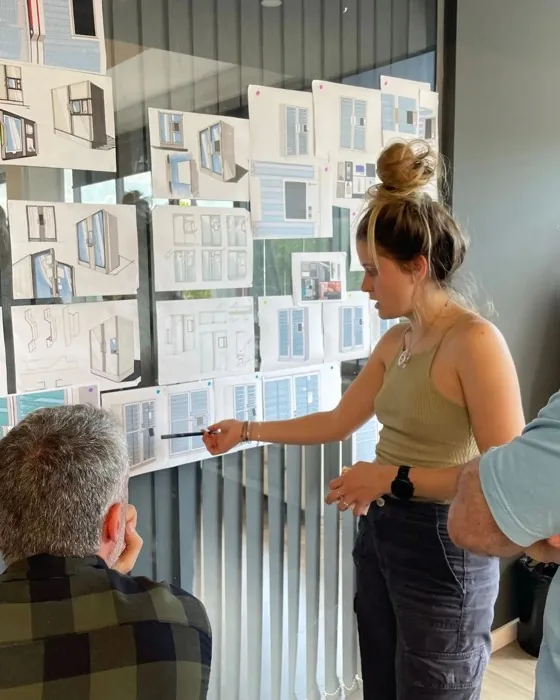
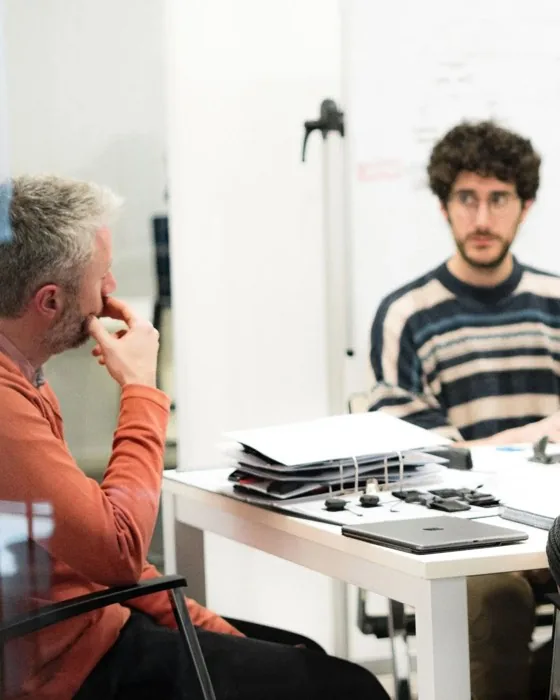
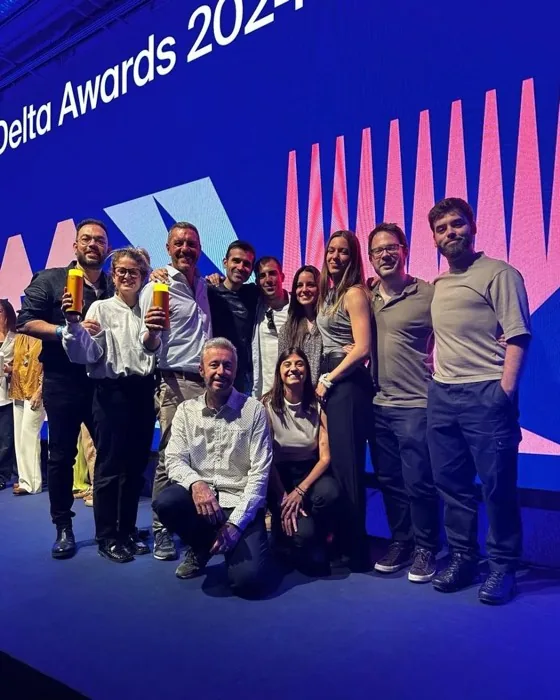
Team · More than one hundred people
Engineers, designers and workshop specialists who make their case with evidence.
Industrial design, mechanics, electronics, software, automation, machining and assembly all within the same building. The people who create your part are just thirty meters away from those who design it, and that’s reflected in how we work and in the final product.
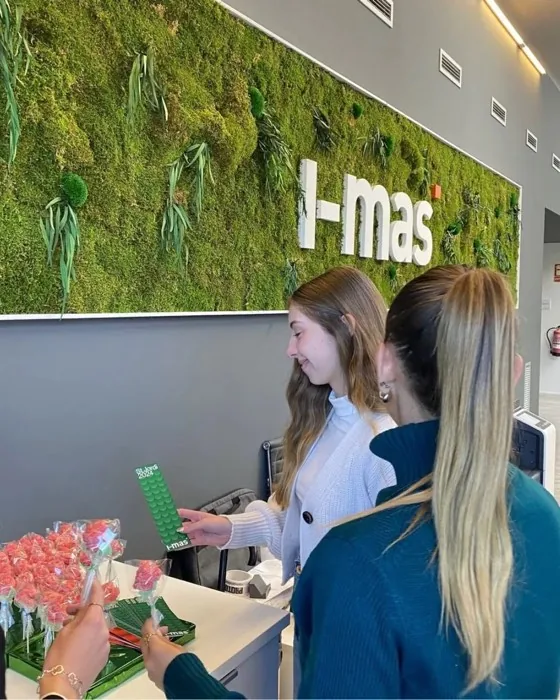 Study · Montcada i Reixac
How we work
Small teams, decisions close to the product.
One department does not design the product and then hand the problem to another. The people who draw, program and manufacture work at the same table from day one of the project.
Projects that end up being realized.
This space isn’t designed for presentations. What you draw is prototyped in the workshop next door, manufactured, and then brought to market. Seeing the finished piece is part of the job.
All disciplines under one roof.
Design, mechanics, electronics, software, automation, machining, and assembly. You learn a great deal when the person making your part is just thirty meters away and tells you what isn’t working.
Very different sectors.
Consumption, health, nutrition, industry, and sport. One month you’re using a medical product, and the next month you’re working with plant machinery – it’s hard to get bored.
True autonomy
Small teams, decisions made close to the people doing the work, and a sense of responsibility from the outset. This also implies that individuals are expected to exercise their own judgment.
People
Who leads, who designs, and who responds to the client.
Ten out of the over one hundred people in the group – those leading the areas and those representing the team on the projects. We will discuss the remaining members of the team, by discipline, below.

He founded i-mas and still takes part in technical reviews: leadership is exercised through the project itself.
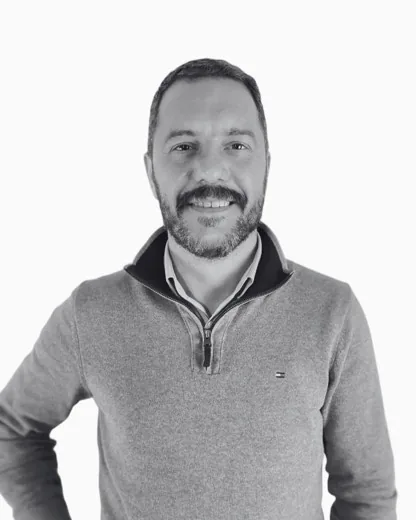
Coordinate the entire product development process, from the initial concept to industrialization.

Leads the design process: focusing on form, materials, and manufacturability within a single discussion.

Plan and manage each project with the client, acting as the point of contact to ensure deadlines are met.

Design the interfaces for devices and machines so that they are intuitive and easy to use without a manual.
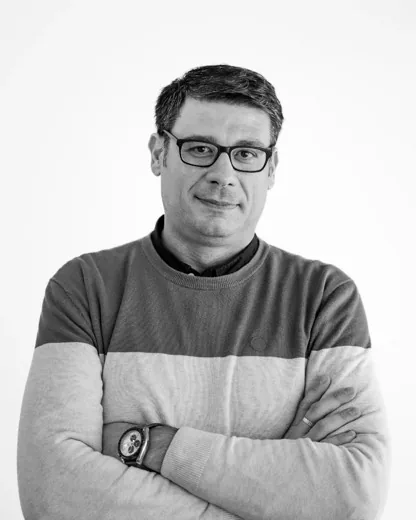
Infrastructure, systems, and security for the group: ensuring everything functions smoothly and nothing is lost.

Selection, onboarding, and development of over one hundred people within the group.
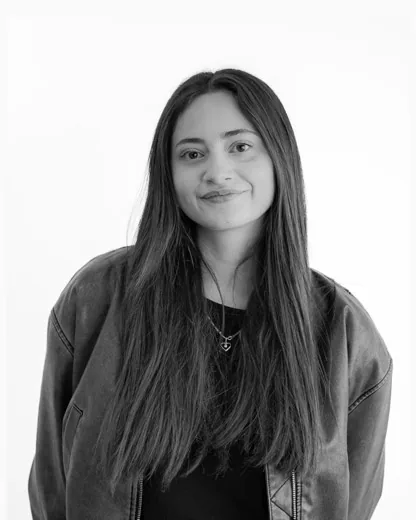
Let’s outline what we do: our branding, content, and our relationship with the market.

Lead the user experience team: the interface is an integral part of the product, not an add-on.

Industrial design and engineering, combined in one person: from concept to manufacturing blueprint.
And over ninety engineers, designers, workshop technicians, electronics specialists, and vision experts – a number that doesn’t fit on this page.
Join our teamDisciplines
All under one roof.
Nine specialities that most companies spread across different buildings or suppliers. Here, they share a corridor, making every iteration shorter.
Industrial design
Product form, usability and manufacturability. Sketching, modelling and prototyping until the part can be made.
Mechanical engineering
Mechanisms, structures and tolerances. From calculations to drawings the workshop can use.
Electronic engineering and firmware
Hardware, circuit boards and the code that makes them work. Validation and certification.
UX/UI design
Interfaces for devices and machines. Making the product understandable from the first use.
Automation and machine vision
Cells, robotics and inspection systems that see beyond the human eye.
CNC programming and machining
Prototypes and short production runs in our own workshop. Precision in metal and plastic.
Assembly and production
Assembly, integration and pre-production batches. Where the project becomes finished units.
Project management
Timescales, budgets and one point of contact for the client throughout development.
Quality and industrialisation
Making sure what works in the prototype also works in the ten-thousandth unit.