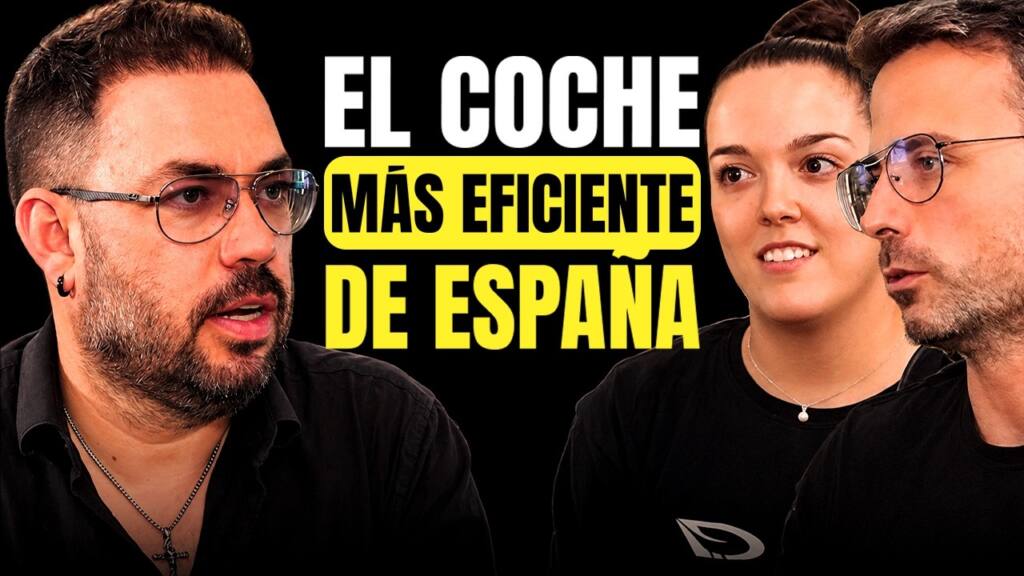
Moving from prototype to manufacturing requires reviewing the design, selecting processes and materials, preparing suppliers, and organizing the initial production units. The development of Citring One demonstrates how these decisions are integrated into a domestic product. In chapter 12 of Toque de Ingenio, Roc Viñas explains the creation of an orange juicer – from validating the user experience to developing its pneumatic system and preparing for production.
Guest: Roc Viñas, who appeared in the episode as CEO of Citring. Interview published: June 3, 2024. Episode: 12. Duration: 1 h 41 min.
In this episode:
- How to verify the desired experience before tackling all the technical aspects.
- Why a functional version may still require material changes.
- What to prepare in molds, suppliers, and assembly before manufacturing.
The conversation was recorded during the early days of Citring’s Kickstarter campaign. The production and marketing decisions described are from that stage of the project.
Validate the need before product development.
Roc came from an environment of technological innovation applied to medicine. When seeking a new project, he wanted to transfer that way of working to a daily need that could be understood and tested by users.
The orange juice prompted a question: since many people enjoy drinking it freshly squeezed, why don’t they prepare it at home regularly? The team used surveys and conversations to explore the gap between the interest in the result and the inconvenience of the process.
Preparing the oranges and cleaning were identified as significant obstacles. Building on this, they defined a desired experience: to introduce the whole fruit, activate the machine, and reduce the subsequent workload.
To explain it, they prepared a video that simulated how it would work using a simple setup. They showed it to various people and recorded their reactions. This material allowed them to discuss a specific proposal before they had the technology to make it possible.
The initial validation helped to guide the project and to uncover expectations. Later, it would also be necessary to check the willingness to pay, the product’s functionality, and its manufacturing capacity.
Size and price were key factors in the search for technology.
The concept needed to fit within a kitchen and be transportable to the market at a price suitable for domestic use. These restrictions significantly limited the technical options from the outset.
Roc recounts that an initial external study did not identify a viable solution under the conditions presented. The team continued to search, and an unexpected reference emerged: inflatable cushions used for lifting heavy loads in emergency work – a technology he had knowledge of from his experience as a volunteer firefighter.
The concept provided a direction for exploring how to apply force to an orange using compressed air. Building on this idea, Citring developed its own pneumatic actuation system, tailored to the dimensions and specific needs of its product.
The transition between the two applications required a significant amount of work. The technology needed to function within limitations regarding size, cost, assembly, and usage – limitations that differed from those found in industrial settings. Choosing a particular method of operation opened up a development path that still needed to be transformed into a manufacturable product.
Designing around the preparation and cleaning process.
In the episode, Roc describes a machine where a user can input up to three whole oranges. The system cuts them and then presses them using pneumatic actuators to extract the juice.
One of the key components is a silicone element that separates the pressing process from the mechanisms. Its geometry follows the movements of the system and makes it easier to remove the part that comes into contact with the fruit and the juice.
Cleaning was, therefore, integrated into the architectural decisions. It was necessary to study which surfaces were likely to get dirty, how they would be soiled, and what the user would need to do after using the machine.
This approach connects with User experience design. In a household product, the experience encompasses preparation, use, and maintenance. An improvement in the moment of activation loses some of its value if it’s followed by a difficult cleaning task.
The case also demonstrates how a user’s need ultimately transforms into a challenge involving geometry, materials, and mechanisms. The sense of comfort experienced when using the product is built through specific technical decisions.
Prototyping: testing mechanisms with the actual product.
Developing an unconventional technology for this type of product forced the team to work on multiple fronts. Roque mentioned the difficulty of finding components and suppliers that met very specific dimensions and costs.
“Practically at every stage of the project, there has been a disadvantage”.
Roc Viñas, 32:15.
The project went through various approaches to organizing its development, ultimately leading to the formation of an internal team. As needs evolved and new problems arose, the contributions of those involved were gradually integrated.
Roc particularly emphasizes experimentation. With a machine of this type, the models and drawings needed to be tested against real oranges, functioning mechanisms, and repeated squeezing tests. This activity allowed them to determine whether they performed as expected and what adjustments were needed.
El prototyping It provided information to determine the next step. Each version helped to better understand the system, to define specific requirements, and to reduce uncertainty before committing production investments.
That accumulated knowledge also forms part of the value of a development. By the end of the process, the team gains an understanding of problems, interactions, and limitations that would not be obvious simply by looking at the finished product.
Design for manufacturing: review materials before launching molds.
The conversation marks a significant shift when the project had already reached a functional version. The team received a proposal to reduce the weight and review the structure, which was intended to withstand the stresses generated during operation.
That work led to replacing an internal metal structure with a plastic solution, incorporating the necessary reinforcements. Roc explains that this modification allowed for a lighter product and opened up new possibilities for its exterior design.
The decision delayed the release of that version, but it also improved aspects that would have consequences for the final product and its logistics. When developing the hardware, it’s advisable to study these decisions before setting geometries and producing the tooling used to manufacture the parts.
Citring also received a design award. Citring One product sheet in iF Design Identifies Citring Universal as a manufacturer and design team, with Rafa Rabasa, David Macías, Julio C. Ruiz, and Roc Viñas as key members. In the interview, Roc highlights the team’s contribution and the value of this recognition, following years of development.
From prototype to manufacturing: suppliers and assembly.
Roc distinguishes between the effort required to develop the product and the effort needed to industrialize it. The second stage includes molds, sourcing materials, assembly, and the resources necessary to manufacture the initial units.
When the episode was filmed, the team had established a supply chain that combined suppliers from various origins and involved final assembly in Mataró. The proximity was intended to facilitate learning and monitoring of the production process during the initial stages.
This planning provided context for the Kickstarter campaign. As Roc explains, they used it when development was advanced and the key components had a supplier, a cost, and estimated timelines. This stage connects with the preparation of industrial assembly And the start of production. The aim was to allocate the initial units to buyers and to gain a better understanding of market response.
The campaign allowed for an assessment of interest in different countries and coordination between initial demand and production. The results during the recording were preliminary; the value lies in understanding how the team prepared that phase and why they chose that specific moment to begin it.
Roc also advocated for initiating the commercialization process with a direct relationship with the customer. Receiving early feedback would help to understand how the initial units are being used and any issues that arise. The sales channel was an integral part of the product’s launch.
What does Citring teach to someone who wants to develop hardware?
Towards the end of the conversation, Roc returned to the difficulty of estimating a project that genuinely involves innovation.
“Trying to do something that hasn’t been done – I think that’s a challenge.”
Roc Viñas, 92:20.
From his experience, four key lessons can be identified:
- Transforming user frustrations into requirements. Preparing and cleaning were specific issues that guided the design from the outset.
- To try out the desired experience soon. A simple demonstration allowed us to discuss the proposal before addressing the entire technology.
- Reserve space for iteration. The team had to review components, materials, and configurations as they learned.
- Preparing the production process in conjunction with the launch. Costs, suppliers, and the initial units all required their own specific planning.
Citring One demonstrates how a seemingly simple need can actually require complex development. The task involves maintaining a clear understanding of the experience being offered, while simultaneously addressing the necessary conditions to produce it reliably.
In i-mas, we support projects of product design and development, From the initial concept and engineering, through prototyping and manufacturing. If you’re developing a physical product and need to define that process Tell us your idea..
To continue reading: What should be validated before investing in the development of an idea..
Source of article: Interview with Edgar Guerrero on Toque de Ingenio with Roc Viñas. The excerpts cited link to the minute of the conversation. The recommendations for other projects are a summarised editorial from i-mas.