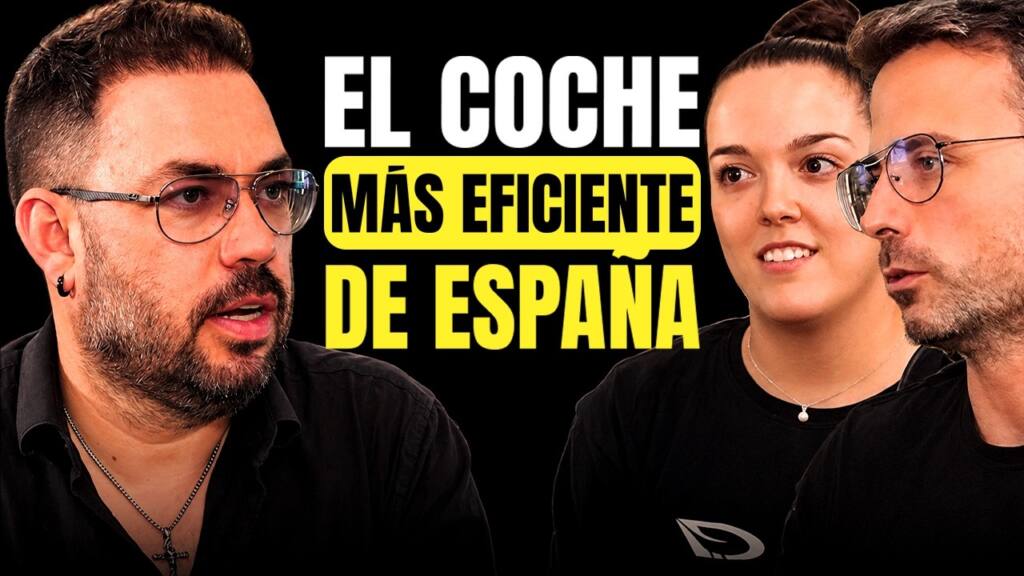
An electric car charger offers real value when it allows for a predictable charging experience. The advertised power is just one aspect – access, payment, information, and maintenance are also important. In chapter 46 of Toque de Ingenio, Martí Salvador explains how FLOOX addresses these requirements, drawing on expertise in power electronics and by considering the issues faced by users.
Guest: Martí Salvador, who is introduced in the episode as FLOOX’s business manager.
Interview published: April 15, 2025. Episode: 46. Duration: 1 h 4 min.
In this episode:
- Why installing charging points and offering a reliable service are related activities, but distinct ones.
- How do app usage, payment methods, and location influence the charging experience.
- What does developing a common technological foundation and accompanying it with monitoring offer?
Edgar initiates the discussion based on his experience as a driver of an electric vehicle. Martí also uses this technology, so the conversation combines the manufacturer’s perspective with real-world usage scenarios. The references to infrastructure, markets, and FLOOX plans are as of April 2025.
Availability is part of the product.
The interview begins with a clearly discernible frustration: reaching a charging point only to encounter a problem that prevents its use. A dead device, an unresponsive app, or connectivity issues can disrupt the service, even if the charger is visible on a map.
Martí differentiates between generations of infrastructure and highlights the need for equipment renewal. The discussion encourages an evaluation of a network based not only on the number of installed points, but also on the experience and value it provides. For those who need to continue a journey, the most important factor is the ability to charge devices.
This perspective shifts the definition of the product. The physical charger is part of a system that includes supply, communication, operation, and maintenance. If any of these elements fail, the user may perceive the entire system as a single, unsatisfactory experience.
From engineering, the case raises a practical requirement: to define how any issue will be detected and who will be responsible for resolving it. Reliability encompasses performance during use and the ability to restore service. This foresight must be integrated into the design from the outset.
Applications and payment: designing the entire process.
One of the most revealing moments in the episode occurs when Edgar reviews the apps he’s installed for his travels. The sheer number of tools and records accumulated demonstrates the complexity that can be transferred to the driver when each service organizes its own experience.
Martí explains the role of interoperability and solutions that allow access to different operators. The discussion also covers payment via card and the need for drivers to understand how to initiate a session. These are service-related issues with direct consequences on the use of the equipment.
The clarity of the pricing becomes apparent through Edgar’s experience with payment concepts that he hadn’t understood as he anticipated. This example allows us to break down several key questions: how much does the energy cost, what other charges are involved, and what information is provided to the person before they agree.
For the User experience design, The recharge process demonstrates the importance of reviewing the entire sequence. Identifying the point, locating the connector, initiating the payment, confirming the charge, and completing it are all part of a single task. A helpful interface reduces uncertainty at each transition.
The location and the operation determine the necessary charger.
FLOOX caters to a diverse range of clients with varying needs. This includes energy operators who sell electricity, and companies that need to charge their own fleets. While both use charging stations, the reason for purchasing them and the consequences of any issues can differ significantly.
In a fleet, the availability of equipment directly impacts the readiness of vehicles for work. Similarly, in a public installation, the flow of users and nearby services are also important. The discussion links location with established habits, such as stopping at a service station.
Martí summarizes a portion of that decision regarding the implementation:
“The location is key”.
Martí Salvador 27:36.
The installation also needs to take into account the available power and the conditions of the location. The equipment cannot be evaluated in isolation from where it will be used. To define a suitable solution, it’s best to start with the intended use, any real restrictions, and the operation it needs to support.
Power electronics and a common foundation for the range.
Martí presents FLOOX as an initiative stemming from a company with prior experience in power electronics. This previous expertise forms the basis for entering the charging market. The business opportunity is founded on the knowledge that the team had already developed in previous work.
When describing the technical evolution, explain the effort invested in a shared foundation among developers. This decision allows for the reuse of existing development work and the organization of a range of elements with common features. A well-defined platform helps to ensure that new versions don’t always start from scratch.
However, modularity doesn’t eliminate the challenges associated with increasing power. The interview raises thermal issues and losses that need to be reviewed as the equipment evolves. Sharing a technological foundation requires understanding what can be maintained and what changes with the new operating conditions.
The case is relevant to development of electronics Regarding industrial products. A family of equipment needs to balance reuse, specific requirements, and maintenance possibilities. Architectural decisions can either simplify or complicate both future versions and the servicing of already installed units.
Listening to the user and monitoring the service.
FLOOX recounts going out to inquire about what was expected of the loaders. The answer Martí remembers was straightforward:
“that they work/function”.
Martí Salvador 52:06.
Although brief, that response encapsulates a key design priority. While users may appreciate additional features, they first need to complete the fundamental task. For the development team, this approach helps to prevent a long list of functionalities from overshadowing the core, everyday usability.
Martí explains that the proposal includes monitoring to detect unusual behavior and alert the client. The team’s observation during service allows for a connection between design and operation. The manufacturer can learn from what happens after installation and facilitate intervention when an issue arises.
The interview also covers heavy-duty loaders and research areas such as wireless charging. These were plans presented at the time, dependent on the evolution of vehicles and the market. The challenge lies in preparing for future capabilities while remaining aware of the existing needs that require a solution.
In that context, a product roadmap needs to differentiate between what the client is currently using, what they are requesting, and what is still being explored. This distinction helps to allocate work effectively and to communicate precisely what each version of the product can offer.
What can another development team learn?
- Define the full scope of the user’s task and assess whether they can complete it consistently.
- Design a comprehensive system encompassing the design of the team, interface, communications, and maintenance as integrated components.
- Using a common technological platform will facilitate product evolution and ongoing support.
- Link new benefits to usage requirements and actual installation conditions.
The FLOOX case illustrates how technical expertise in power electronics can evolve into a recharge proposition. The interview places reliability and everyday experience at the heart of development. For companies preparing new industrial equipment, i-mas can help to organize requirements, integrate disciplines, and move towards a solution tailored to their specific environment. Tell us what product you are developing..
To continue reading: The conversation with Audax regarding the electrical system and renewable energies..
Source of article: Interview with Edgar Guerrero on Toque de Ingenio, presented by Martí Salvador, published on April 15, 2025. The quotes link to the relevant sections of the video; the “learnings” are a summarized editorial version of the conversation.