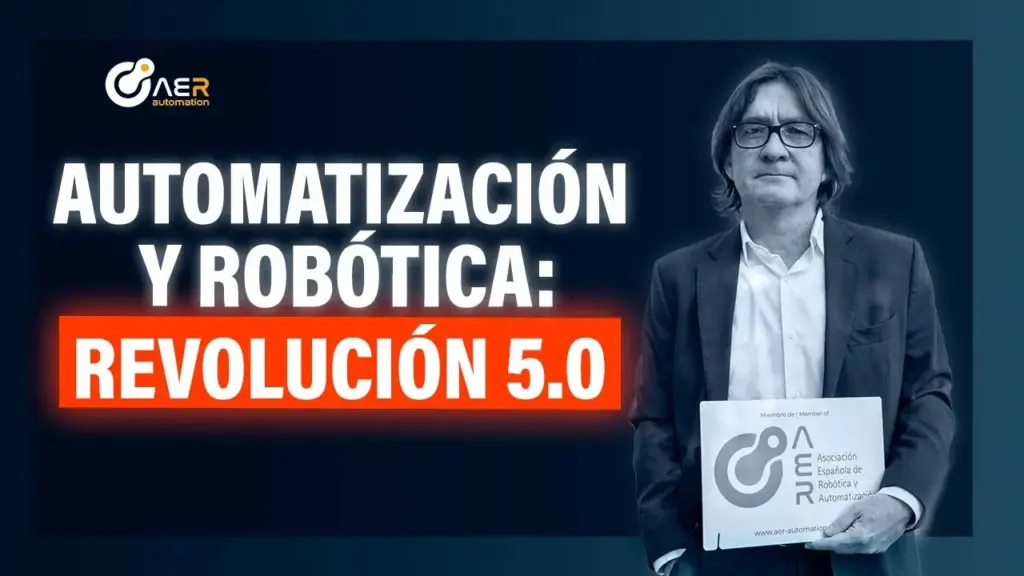
Industrial automation for SMEs starts with understanding the factory’s processes and needs. Álex Salvador, general manager of AER Automation at the time of the interview, talks with Edgar Guerrero about bringing robotics and integration to companies at different stages of digitalisation. Episode 18 of Toque de Ingenio connects technology, operational returns and training for the people who use it.
Guest Alex Salvador. Company or organization: AER Automation.
Interview published: July 15, 2024. Episode: 18. Duration: 1 h 31 min.
In this episode:
- How to define a need before choosing a robot.
- What is the role of engineers and integrators within an installation?
- Why monitoring and human teams are part of automation.
Small and medium-sized businesses start from different situations.
Alex explains that technological adoption isn’t uniform. Some companies have established, automated processes, while others still need to organize information and manage it effectively. Talking about Industry 4.0 without understanding this starting point can make the conversation difficult.
The guest suggests approaching the SME with a needs assessment. The technology should respond to a specific operation and a defined set of resources. The same solution shouldn’t necessarily be suitable for factories with different products, ranges, or equipment.
This approach connects with Industrial automation Regarding i-mas: the aim is to study the process itself, identify its limitations, and determine what improvements are intended. This objective is formulated before selecting the components.
From the robot manufacturer to the end-user process.
AER brings together profiles from various parts of the supply chain: manufacturers, integrators, distributors, centers, and users. In the discussion, Alex highlights the role of engineering that connects a technology with a real-world application.
A robot requires a task, the necessary tools, and integration with its environment. The value of the installation depends on whether these components work together effectively, and whether the factory team can utilize it within their regular operations.
Edgar offers a dual perspective: i-mas works on integration and also understands how automation is used in manufacturing. The conversation connects the design of a solution with the demands of using it every day.
Industrial automation for SMEs with a measurable objective.
Alex describes a sequence encompassing needs assessment, integration, and performance monitoring. The evaluation doesn’t end with the purchase of the equipment; it’s necessary to check what changes in the process once it’s been installed.
“integration and monitoring”.
Alex Salvador 27:21.
For a company, this means defining the desired outcome: a more consistent operation, increased production capacity, or a reduction in repetitive tasks. The choice depends on the difficulty identified and should consider the actual conditions of the process.
The numbers used to evaluate a proposal require context. Factors such as available time, reference changes, component feeding, and stoppages all influence the operation. Simply analyzing the robot’s speed leaves out a significant part of the system.
Robotics are becoming integrated with machines, parts, and people.
The interview explores various forms of robotics and examples of applications. The key focus is to broaden possibilities without assuming that every task should be automated, and feasibility is assessed on a case-by-case basis.
“It’s important to consider whether it’s worth doing so”.
Alex Salvador 57:10.
A system needs to determine how the components arrive, how they are secured, and how the outcome is detected. Industrial machine vision It can be involved when the application requires locating, verifying, or classifying, always within a defined need.
The conversation also indicates that seeing examples helps to imagine improvements. A demonstration is useful when it allows one to recognize a specific task and then to study its differences, limitations, and integration needs.
Prepare the operation following installation.
Monitoring performance requires observing the installation under actual working conditions. The results should be compared with the initial reference and with any changes made. This review helps to identify adjustments and to understand the true effect of automation.
It’s also important to define who uses the system, how changes are made, and what information needs to be maintained. These aspects are part of the implementation, although they are less visible than the actual movement of the machinery.
For the engineering team, documentation and acceptance testing connect specifications with practical use. Any delivered solution needs criteria that allow us to determine whether it’s fulfilling the agreed-upon function.
Technical skill and the ability to work effectively with others.
In the final section, Alex highlights the human dimension of industrial talent. Technical training is essential, but people also need to communicate, collaborate, and work alongside new tools.
The guest focuses on the intersection of industry, educational centers, and training. Automation requires profiles that understand both the technology and the process it’s applied to. Learning continues throughout the implementation and operation.
In projects with specific needs, the Specialized technical support It can complement the company’s team. Collaboration works best when there are clear objectives, responsibilities, and interfaces.
Questions about industrial automation for SMEs
Where should we begin when automating a small-to-medium-sized industrial business?
To observe the process and identify the need that needs to be addressed. Following this, potential solutions are examined, and criteria are established to verify the improvement.
What does an automation integrator bring to the table?
Connect equipment, tools, and control systems with the actual operation of the factory. Their work involves studying requirements and preparing the overall implementation.
What to check after installing a robot?
The performance within the actual process, any changes in reference, and the needs for usage and maintenance. This comparison should be made against the objectives established at the outset.
Four key takeaways from the chapter.
- The starting point of each factory determines the solution.
- Buying a component and automating a process are different tasks.
- The improvement requires verification criteria.
- People and training are involved in the implementation process.
From learning to product development.
At i-mas, we design industrial automation, robotics, and machine vision solutions based on the specific process you want to improve. Tell us which operation you would like to study. and we can define together the technical scope.
You can also read. Automation of picking with Illumo Robotics.
Source: Original interview from Toque de Ingenio, published on YouTube on July 15, 2024. The experiences, figures, and plans discussed in the interview are reflective of that specific time. The references to i-mas services are the editorial analysis of the article.