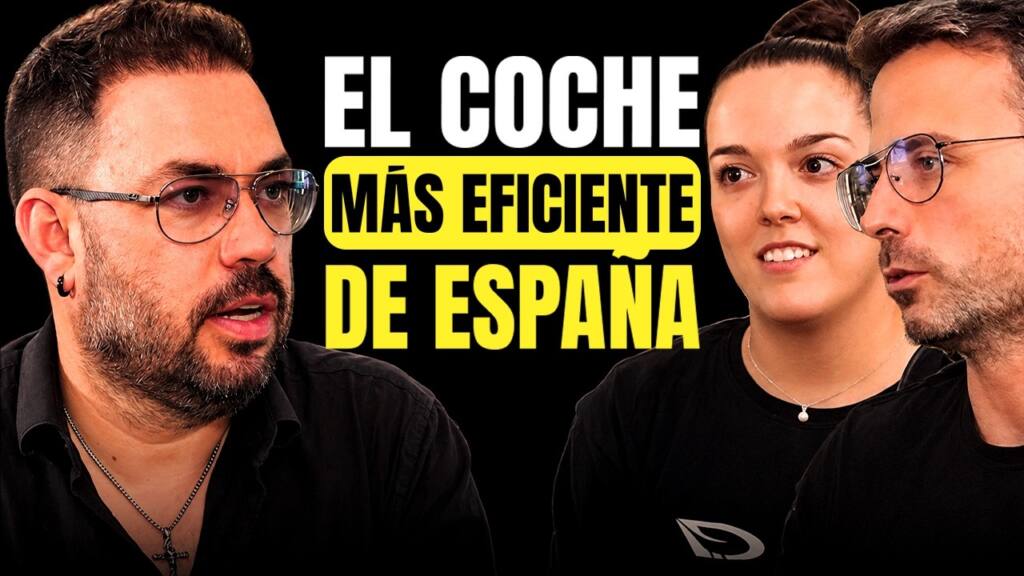
The development of racing motorcycles involves combining data from the vehicle, rider experience, and the ability to adapt a solution within a demanding schedule. Jesús Rincón, KOVE’s team manager at the time of the interview, explains in chapter 2 of “Toque de Ingenio” how the track team connects with the manufacturer’s engineering. The episode illustrates a cycle of observation, adjustment, and validation, applicable to technical development work.
Guest Jesus Rincón. Company or organization: KOVE.
Interview published: March 11, 2024. Episode: 2. Duration: 0 hours 58 minutes
In this episode:
- How do data acquisition and the pilot’s sensations relate to each other?
- What’s the difference between tweaking something in-situ and developing a modification?
- Why documentation and communication are important when changing a vehicle.
From technical training to a competitive team.
Jesus explains that his interest in motorbikes led him to study mechanical engineering. The conversation covers work and competition experiences, culminating in the opportunity to organize a team alongside the manufacturer, KOVE.
Setting up that structure involved people, equipment, and operations, as well as knowledge of the vehicle. The project required the ability to move, work, and respond to the demands of a sporting calendar.
The experience demonstrates that technical development relies on an organization. Design and testing require available resources, clear responsibilities, and a method for coordinating work.
Acquisition of data to understand behavior.
Jesus makes a useful distinction between telemetry and data acquisition. He explains that, in the system described, the information is downloaded when the motorcycle returns to the garage, rather than being received during its track run.
“When the motorcycle arrives at the box, you download the data”.
Jesus Rincón 25:48.
Accuracy is key to understanding the workflow. The team analyzes the recorded data to study a vehicle situation and prepare decisions. The method used to gather information determines when it is possible to act upon it.
In the product development, It’s essential to define what data a test requires. The record should answer a question, rather than simply becoming a collection of signals.
The pilot provides another source of information.
The interview links the data with the pilot’s feedback. A perceived difficulty on a curve leads the team to investigate what was happening at that specific moment. Both sources are used to interpret the behavior.
The method avoids relying on a single observation. The team needs to link a sensation to specific conditions and parameters that can be studied. Afterwards, they should check whether the adjustment effectively addresses the problem that was identified.
Los prototypes and functional testing They follow a logic comparable to this: formulating a hypothesis, observing the result, and reviewing the solution. The value of the test depends on being able to relate the change with what is being measured.
From on-track adjustments to manufacturer engineering.
Jesus describes mechanics and engineers who work with the vehicle and its data. When they detect a need for modification, they coordinate with the racing or engineering department, which provides them with support.
“We proposed the relevant modifications”.
Jesus Rincón 28:28.
The conversation, therefore, outlines a preliminary response within the scope of a project requiring further resources. The information needs to be conveyed with sufficient detail so that another team can fully understand the problem.
That coordination is also important in industrial projects. An instance of use may require reviewing a component, an assembly, or a specification. Documenting conditions and results helps to avoid modifications based on different interpretations.
The data presented is relevant when the system changes.
Jesus explains that having information from previous seasons is helpful, but that a significant change, such as a different engine, alters part of the reference. The team needs to recognize which learning remains applicable.
The key takeaway is to review the conditions under which a validation was achieved. If the product changes, not all of the original conclusions will automatically apply to the new version.
El machining of components And prototyping allows for the realization of changes, but the modified part must be re-examined within the overall design. Creating the new geometry is a stage of the process, not its final verification.
Coordinate resources to meet a schedule.
The interview also covers logistics, sponsors, and team management. Jesús needs to establish a structure that allows for working in multiple locations and maintaining contact with the manufacturer.
The available time influences decisions. The organization needs to determine what can be resolved immediately and what requires a more thorough review. Communication between people prevents the loss of information when work moves between different environments.
In an engineering firm, the Specialized technical support It can expand its capabilities if there are clear interfaces and objectives. The team needs to know who makes the decisions, who carries them out, and what evidence confirms the result.
Competition as a technical learning route.
This episode covers the situation in March 2024 and the plans discussed by Jesús at that time. Its value lies in the learning cycle: observing, interpreting, modifying, and verifying.
The pressure of deadlines reveals underlying principles that are also important outside of the immediate context. The quality of information and coordination between teams help transform a challenge into a verifiable improvement.
Questions regarding the development of racing motorcycles.
What difference does Jesus point out between telemetry and data acquisition?
In the system described, data is downloaded when returning to the box. Telemetry would involve receiving information while the vehicle is on track.
Why combine data and pilot feedback?
Because they offer complementary perspectives on a challenge. The team can relate the feeling to a specific situation and explore a concrete adjustment.
What happens to validation when a key component changes?
It’s necessary to review which previous conclusions remain relevant. The new dataset may require testing to confirm its behavior.
Four key takeaways from the chapter.
- The data should answer questions related to development.
- User feedback complements measurement.
- The changes require clear information and defined responsibilities.
- A new version may require reviewing previous validation.
From learning to product development.
In i-mas, we connect engineering, prototyping, and testing to develop components and products. If you need to transform an issue or an idea for improvement into a technical solution, Tell us the background/context..
You can also read. Formula Student engineering with NovaRacing and UPC ecoRacing..
Source: Original interview from Toque de Ingenio, published on YouTube on March 11, 2024. The experiences, figures, and plans discussed in the interview are reflective of that specific time. The references to i-mas services are the editorial analysis of the article.