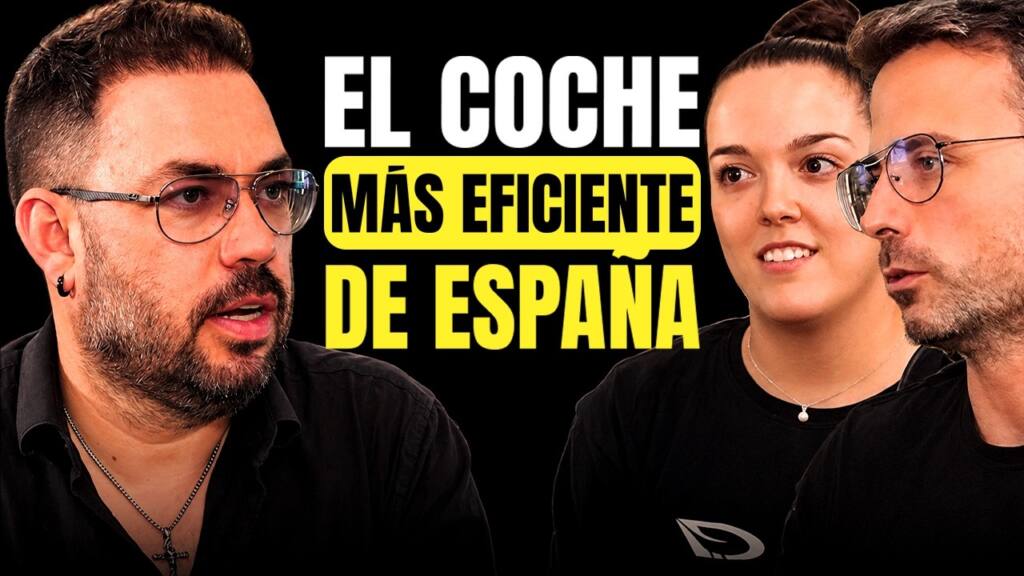
Designing an accessible shower requires an understanding of both the person using it and those who assist them, install, or maintain the equipment. Èric Güell, founder of Showee, explains in chapter 22 of “Toque de Ingenio” how his team integrated water, soap, drying, and electronic controls into a solution that evolved through testing in centers. The interview demonstrates why user experience should be involved in product development from the outset.
Guest Èric Güell Company or organization: Showee.
Interview published: September 30, 2024. Episode: 22. Duration: 1 h 24 min.
In this episode:
- How a daily need transforms into product specifications.
- What did Showee learn by going from the tests to the initial installation?
- Why electronics, accessibility, and maintenance should be designed together.
From a need for independence to the initial tests.
The project originated from a desire to simplify a daily activity for people who find it challenging to perform. Eric recalls an initial phase of work outside of regular hours, involving testing components and mechanisms before a complete prototype was available.
The conversation steers clear of presenting the product as the result of a single, immediately-solved idea. The team required funding, additional knowledge, and successive versions to integrate the features. This process allows us to differentiate between a design intention and a system prepared for use.
In a project of this nature, accessibility is defined by tasks such as: selecting a program, reaching a control, adjusting the height, or requesting assistance. Defining these scenarios provides more useful criteria than simply describing the product as easy to use.
Integrating water, soap, and drying into a single architecture.
Eric describes the integration of different cycles within the shower experience. The work involved electronics, control mechanisms, and body drying, with complementary technical profiles within the team. Each function needed to work harmoniously with the others within a defined space and environment.
One of the challenges involved carefully measuring and distributing soap using varying water pressures. The guest explained that simply moving a spraying system designed for a different application – the experience required different conditions.
La Electronic engineering It needs to work here, alongside mechanical design and fluid dynamics. Simply activating an output is only a part of the function; you also need to define how it starts, how it’s interrupted, and how the cycle is understood.
Test with users before scaling up production.
Working with Ampans enabled a transition from testing within a spacecraft to a first installation in a real-world environment. Eric describes how users and professionals provided valuable feedback that couldn’t have been obtained solely within the development team.
The interview reveals that an accessible solution isn’t a one-size-fits-all approach. Needs, preferences, and support systems vary significantly. Therefore, programs and interactions should be able to adapt to different situations.
Los functional prototypes They have a specific objective here: to observe a usage sequence, identify difficulties, and verify modifications. The test should help determine what needs to be changed and why, as well as demonstrate that the mechanism is functioning correctly.
An interface that links program, preferences, and environment.
In the version described, the screen allows access to users or programs, depending on the installation. Eric explains that it’s possible to configure preferences and set up usage conditions. He also distinguishes between automatic operation of manual controls and regular functionality.
The design of the interaction incorporates signals, music, and other elements that influence how the experience is lived. Guests report that the enjoyment of the shower has gained importance alongside the autonomy and privacy that initially guided the concept.
“His/her method of showering”.
Èric Güell 52:16.
La user experience and UX/UI design They allow you to connect those preferences with an understandable interface. The aim isn’t simply to add screens, but to facilitate decision-making and reduce obstacles during a personal activity.
The installation is also part of the design for an accessible shower.
When discussing the initial units, Eric recalls significant difficulties, including issues with walls and coordination between installers and maintenance teams. The operation during a demonstration did not automatically resolve the installation at each center.
“I hadn’t expected so much upheaval.”
Èric Güell 27:42.
This experience broadens the scope of development. The attachment points, access, connections, and initial setup all impact the final product received by the client. If these elements are introduced late in the process, they can require difficult and complex modifications once a series has already been manufactured.
The design for manufacturing and assembly should incorporate those requirements from the very beginning of the decision-making process. A technical team can prepare a unit while simultaneously researching what the person who will transport, install, and inspect it needs.
Measure the usage and organize the following series.
Eric shares observations regarding water consumption and feedback from centers. These are results and experiences presented by Showee in September 2024; however, the article does not guarantee identical savings for any installation.
It also explains the shift from testing units to sales and new product lines. The company needed to learn how to manage operations, communicate the product effectively, and cater to its customers. Growth required coordinating a wider range of activities than simply developing the device itself.
Towards the end, the team distinguishes the functions they want to keep as their own, and those for which they are seeking specialists. This decision is linked to industrialization: defining who produces, with what documentation, and how quality is maintained as the number of units increases.
Questions regarding the design of an accessible shower.
What should be considered in the design of an accessible shower?
The user’s interaction, the support they require, and the conditions of the space – Showee adds to these needs the integration of water, soap, drying, and control.
Why try the product in a real-life setting?
Because it allows us to observe preferences, difficulties, and operational aspects that a single demonstration cannot replicate. During the interview, this collaboration guides successive improvements to the product.
Should the installation be completed after the prototype?
It should be considered during the development process. Factors such as weight, fixings, connections, and maintenance will determine whether the equipment can be installed in different spaces.
Four key takeaways from the chapter.
- Accessibility is assessed through specific tasks.
- The programs should respond to various individuals and contexts.
- The assembly and installation influence the final design.
- Scaling requires coordinating manufacturing, communication, and customer service.
From learning to product development.
In i-mas, we combine product design, electronics, and user experience to develop solutions that can be manufactured and integrated into your environment. If your project involves physical interaction and control Tell us what you need to resolve..
You can also read. The development of Aurax’s support products.
Source: Original interview from Toque de Ingenio, published on YouTube on September 30, 2024. The experiences, figures, and plans discussed in the interview are relevant to that specific time. The references to i-mas services are the editorial analysis of the article.