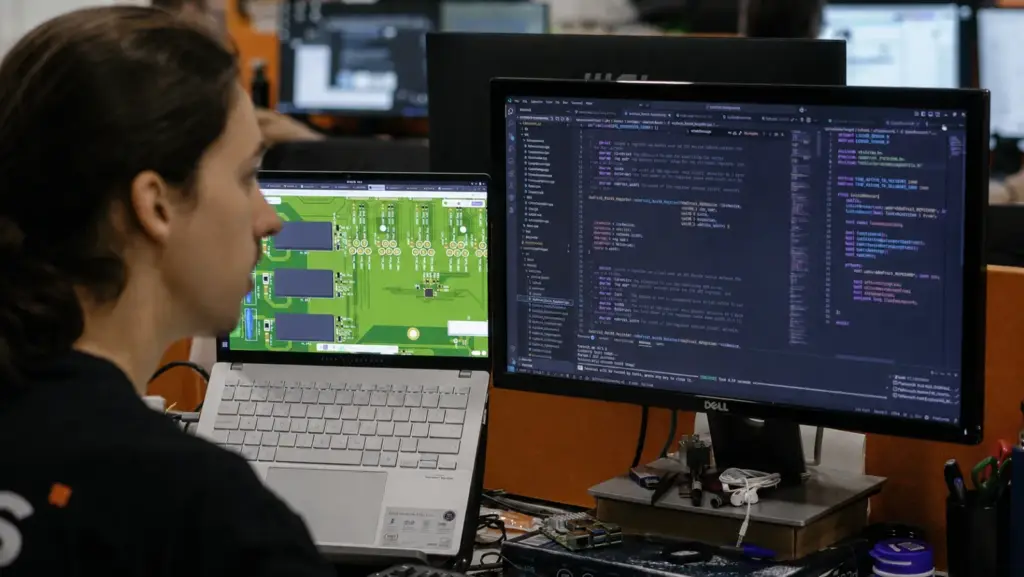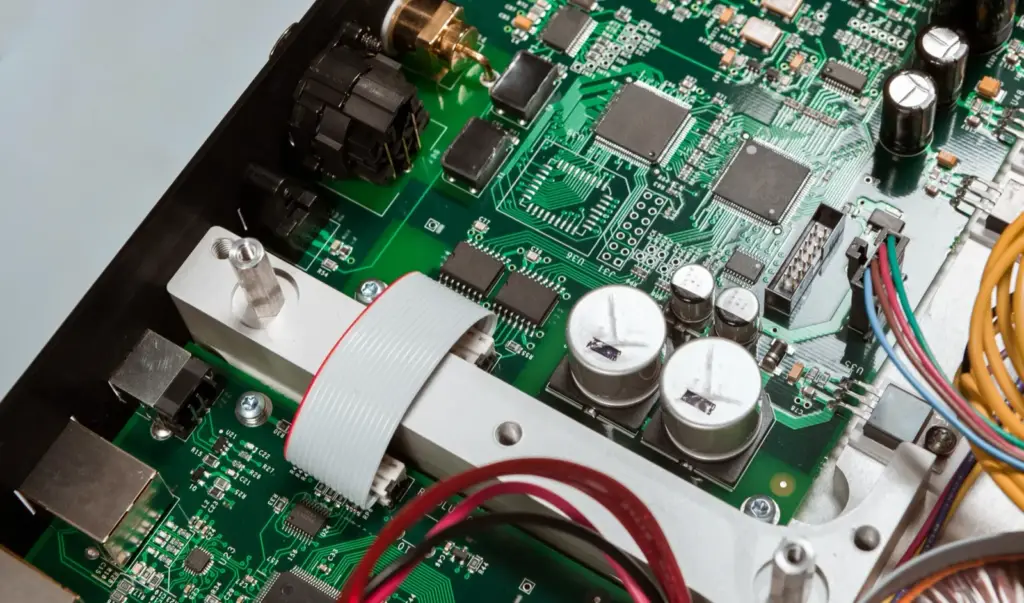
In the development of technological products, one of the most common mistakes is assuming that if the circuit works, the job is done. The reality is different: the real challenge comes when that design has to move into electronic manufacturing efficiently, repeatedly, and profitably.
It is at this point where bottlenecks. Problems that aren’t always apparent in the early stages, but which directly impact the cost, timelines, and the final quality of the product.
Anticipating and resolving them from the outset is key for any company that wants to grow. electronic product with success.
Electronic components and supply chain.
One of the main bottlenecks in the PCB manufacturing It is related to the availability of components.
Design without considering electronic supply chain It can lead to a single component halting the entire production process. Extended lead times, obsolescence, or reliance on a single supplier are common problems that directly impact deadlines.
Furthermore, in a volatile global context, supply chain management becomes a key strategic factor.
Working with equivalent alternatives, validating components from the outset, and designing with flexibility significantly reduces risk.
Design for Manufacturing (DFM)
A design can be technically sound, but it may not be suitable for actual production. This is where the concept of DFM (Design for Manufacturing) In electronics.
Errors such as overly precise clues, insufficient separation between components, or poor placement can lead to problems in automated assembly.
This directly affects:
- Increase in rejections
- Increase in rework
- Line performance reduction
El Industrial PCB design It’s important to consider the manufacturing processes from the outset, not just the functionality.
Electronic assembly and production processes
The transition from design to assembly is one of the most critical stages in any project. A lack of standardization in processes, incomplete documentation, or undefined decisions create friction within the production line. Every ambiguity translates into wasted time. Optimizing electronic assembly implies:
- Clearly define the processes.
- Standardize instructions
- Minimize manual interventions
The clearer and more automated the process is, the lower the risk of errors and the greater the efficiency.
Testing and validation in live/production environments.
El testing system This is another major bottleneck. A test that takes too long limits the line’s throughput. An insufficient test allows failures to reach the customer.
Design a good system of electronic testing It involves finding a balance between speed and coverage. Furthermore, integrating the test from the early stages of development helps to avoid redesigns later on and ensures greater product reliability.
La Electronic validation It shouldn’t be a final step, but rather an integrated part of the design.
Firmware and online programming.
El firmware It often develops with a focus on functionality, but not always on its integration into production. Manual programming processes, a lack of automation, or lengthy loading times can significantly slow down manufacturing.
Optimize embedded firmware For production involves:
- Automating the scheduling.
- Reduce loading times
- Integrate the process into the line.
A firmware Poorly conceived or implemented can become a hidden but critical bottleneck.
Thermal management and heat dissipation
Another common bottleneck occurs when a product works perfectly in a laboratory setting, but then experiences thermal issues when moved to production or real-world use.
Poor temperature management can lead to intermittent failures, reduced component lifespan, or even complete breakdowns. This is particularly common in products with power supplies, power electronics, LEDs, motors, or processors.
In many cases, the problem isn’t with the circuit itself, but rather that the heat dissipation hasn’t been considered once electronics It should be integrated within the final casing.
Common errors such as inadequate ventilation, poor component distribution, or PCB design Processes that don’t promote dissipation can become a significant bottleneck.
Designing proper thermal management involves:
- Properly distribute the heat-generating components.
- Designing the PCB with heat dissipation in mind.
- Validate thermal behavior under real conditions.
- From the outset, incorporate elements such as heat sinks, ventilation, and suitable materials.
Anticipating these aspects from the initial stages prevents redesigns, reliability issues, and delays in industrialization.
Certifications and regulatory requirements
Another crucial aspect of any electronics project is the compliance with regulations. Failing to consider requirements from the outset, such as CE certification, FCC, EMC certification, Electrical safety or material restrictions, such as RoHS, can prevent a product from being marketed, even if it functions correctly technically.
Many of these requirements directly affect electronic and mechanical design. For example, poor component placement, a PCB lacking adequate spacing, or insufficient shielding can lead to electromagnetic compatibility issues and prevent the product from passing testing.
The problem is that when these aspects are identified at the end of the development process, the necessary corrections usually involve Redesign the PCB, modify the enclosure, change components, or repeat prototypes and testing.. This translates to: This results in higher costs, more time, and delays in the launch.
How do we tackle these challenges from I-MAS Electrónica?
The bottlenecks in the Industrial electronic manufacturing They rarely stem from major failures, but rather from small details that aren’t addressed in time.
Poor component selection, designs that aren’t optimized for production, unclear processes, or inefficient testing systems, can all jeopardize the entire project.
In I-MAS Electronics We are addressing these challenges from a Comprehensive product development vision, connecting design, industrialization, and production from the earliest stages.
Our services are specifically designed to address these key areas/concerns.
- Electronic design and industrial PCB development., Optimized for manufacturing (DFM).
- Firmware and embedded systems, Ready for production and scalability.
- Electronic testing and validation., Designed to ensure quality without compromising speed.
- Electronic industrialization, Integrating processes, costs, and regulatory requirements from the outset.
This approach allows for risk reduction, shorter timelines, and ensures that the product not only functions, but can be manufactured efficiently and profitably.
If your project requires a Custom industrial hardware o an electronic solution that combines performance, scalability, and design. I-MAS Electronics We’ll be with you throughout the entire process.
¡Contact us And takes the first step towards innovation!