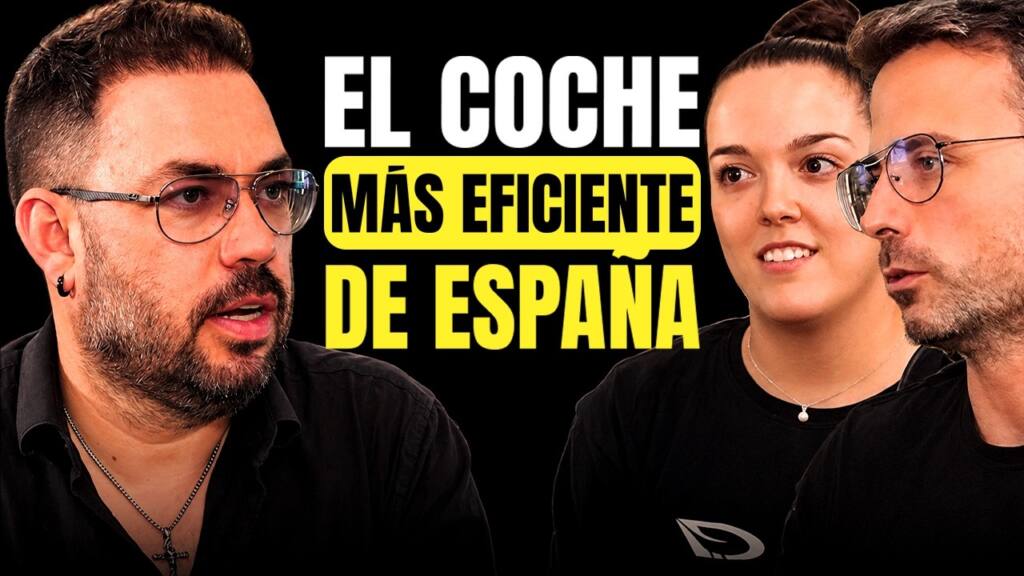
Developing a sugar-free chocolate snack requires addressing two challenges simultaneously: ensuring the taste is appealing and creating a formula that can be produced at a consistent cost. Plesh, developed from the Make It gastronomic innovation center, was tackled with a proprietary fiber blend, prototype formats, and an industrialization process with innovative elements. In chapter 55 of “Toque de Ingenio,” Juan Umbert explains how the product was formulated, what went wrong during the transition to mass production, and how it entered stores and supermarkets.
Guest: Juan Umbert, who was introduced in the episode as a co-founder of Plesh. Interview published: June 17, 2025. Episode: 55. Duration: 1 h 8 min.
In this episode:
- How a blend of fibers can replace sugar while still providing a sense of pleasure.
- Why a substitute for sugar doesn’t behave the same way within the factory.
- What did the team do when they had to change the name, with the packaging already set to print?
The conversation was recorded in the Proto&Go offices. Plesh had just opened his first sales points, and according to Juan, he anticipated expanding into supermarkets within a month.
To formulate a sugar substitute that the brain recognizes.
Juan places the origin of the project in October 2023. From Make It, the innovation center he runs with Adrià Colominas and Víctor Echeverría, they observed that mass-produced snacks are formulated with a focus on cost-effectiveness, rather than health. A typical snack can contain 25 grams of sugar, which is the maximum daily amount recommended by the WHO.
Jaume, his third partner and current CEO, proposed creating in Spain a category of sugar-free snacks, which already existed in the United States and Northern Europe.
The technical basis is a blend of fibers that the team refers to as “Zero Up.” Juan explains that they combined oligofructoses, inulin, and other pre-industrialized ingredients, so that the brain reacts in the same way as it would with sugar. Because it’s fiber, it doesn’t enter the bloodstream as quickly, and therefore avoids the insulin spike.
That formulation differs from bars that combine dates and dried fruit, which is a better alternative to a sugary snack, but uses only two ingredients. Plesh was looking for a more complex structure, incorporating deodorized pea protein for a crunchy texture and a balanced macronutrient profile.
“We’ve collected 900 small pieces and assembled them to create a meaningful structure”.
Juan Umbert 23:36.
Food thinking: researching, developing, and prototyping the format.
The team applied a specific methodology called “food thinking,” which is an adaptation of design thinking to the food industry. Juan highlighted a key difference: a poorly formulated product can lead to the growth of bacteria and cause harm, so food safety is integrated into the method from the outset.
The research identified three key decisions. Firstly, focusing on local production, with Spanish almonds as a primary ingredient. Secondly, utilizing formats that the market would recognize, as a round shape wouldn’t compete within the ‘bar’ category. And finally, a dual-format, designed to promote a sense of sharing.
During ideation, they made around 400 moulds to test shapes and worked with a pastry chef specialising in healthy baking. Prototypes followed, to assess the bite, crunch and rheology of the filling. This cycle of prototypes The pace is the same as with any physical product: each iteration answers a question.
The first strip had edges and a low-poly texture. In the factory, this was simplified: two strips were produced per cycle, and the texture was no longer relevant.
Industrializing a formula that doesn’t behave like sugar.
According to Juan, the most challenging aspect was to successfully incorporate newly developed, industrialized formulations at a retail price of under 2 euros. They brought the fiber mixture to a confectionery machine, using 20 kilos of almonds, trusting that it would form a uniform film, similar to sugar. The mixture was molded into a ball, and the resulting batch ended up as a hard nougat.
The lesson is that substituting an ingredient requires understanding how it behaves in each process, not just how it tastes. Juan recounts that bars produced by an external manufacturer in Spain arrived with artificial smells and an unpleasant texture, because the external manufacturer tends to copy what they already do and adapt it to the cost.
“No one is overly demanding with their product, because that’s what entrepreneurs do”.
Juan Umbert 55:02.
Packaging was another critical point. The fact that a machine could package 30 or 180 bars per minute completely alters the cost structure, and Juan describes Plesh as a company operating on a very small margin. They purchased a filling machine capable of handling 600 kilos, which had to be brought into the factory without a crane. Once installed, the bar didn’t pass through at 1.5 centimeters.
While the supplier was adjusting the machinery, they found an external packaging specialist from the pharmaceutical sector, who had clean rooms and licenses, and who operated at a higher price. This bottleneck, with a line of Automation It’s common when moving from prototype to production that the design isn’t fully adapted to the actual geometry of the product.
Changing the name on packaging during the printing process.
The brand was called Upgrade. They had conducted a naming process with an agency, selecting the name from 120 options and developing the complete brand identity. When they registered the brand, they discovered a German company with the same name, which produced food for athletes. It wasn’t focused on chocolate snacks, so they proceeded with the launch.
They were at the printing plant, about to order a thousand kilometers of film for each reference, when Jaume sent the group a photo: the German company had just launched chocolate bars under the “Upgrade” brand. Juan explained the reasoning: the competitor would take half of the recognition, and losing Germany would close off a market of 80 million people.
That very night, they generated around 40 names, reduced them to four, and put them to a vote. Then, Víctor, a partner with over 30 years of experience in packaging, posed the key question: whether that was the best name, or simply the best name they had been able to create themselves. They hired a naming agency, which, in a week, proposed “Plesh,” a slang term related to pleasure.
Adapting the old graphics to the new name didn’t work. Following an awkward conversation with the branding agency, which had already delivered the project, the result was a new identity – silver in colour, featuring a chocolate bar – which the team interpreted as a unique category.
Entering shops and supermarkets: turnover is key.
The initial sales were secured through investor partners: Incapto Café and Casa Barré (a yoga and ballet center). At the time of the interview, a Catalan supermarket chain had just agreed to stock the product, which Juan considers a key factor in opening up the distribution channel.
Jaume manages the high-volume sales channel, and he had already introduced another brand into retail. Juan describes the price negotiations, logistics, profit margins, and penalties as being extremely complex. The rule that weighs most heavily is the turnover rate: if a product isn’t sold within two months, the chain removes it and doesn’t offer it again.
Because of this, the team is distributing efforts across retail, hospitality, gyms, and hotels, and they offer a savings format specifically for offices with a subscription. The bar weighs 30 grams, compared to the usual 40 or 50 grams: with so much fibre, this snack is satisfying and you don’t need anything else.
Juan also announces transparency: the chocolate purchased contains maltitol and erythritol, and the aim is to produce a chocolate entirely without sugar. The starting point – the regulatory framework – is the HFSS regulations in the United Kingdom, which restricts the advertising of products high in fat, sugar, and salt.
Sports investors and purpose
Among the investors are Marc Gasol, Rudy Fernández, and Gerard Piqué. Juan attributes the access to Jaume’s network and previous investors, and the success of the venture, to the product itself: when they tested it, they saw its potential.
With the Gasol brothers, who have an organization against childhood obesity, the team wanted to launch a nutrition program and possibly a helpline for children.
When asked about his approach as an entrepreneur, Juan recommends clearly defining the purpose, surrounding yourself with good mentors, explaining the idea until anyone understands it, and testing the product quickly.
What can another development team learn?
The Plesh case offers four key lessons for anyone developing a consumer product:
- Testing the ingredient throughout the process, not just in the recipe. A substitute can know the same information and behave differently within the machine.
- Design for the factory. The visual effect seen in the prototype may disappear when two bars need to be extracted per cycle.
- Check the branding across all markets before printing. A national registry does not protect against a European competitor.
- Determine the packaging size based on the target cost. The speed of the line determines both the margin and the formulation.
At the time of the interview, Plesh was selling four reference packs, two almond bars, and two packs of almond-flavored tablets, through their website and at affiliated stores.
In i-mas, we’ve supported the transition of the prototype to the production line, from the product design and development …even down to bespoke automation and packaging. If your project stalls when you reach the factory Tell us about your project..
To continue reading: How to plan the transition from prototype to manufacturing..
Source of article: Interview with Edgar Guerrero on Toque de Ingenio with Juan Umbert. The excerpts cited link to the minute of the conversation. The recommendations for other projects are a summarised editorial from i-mas.