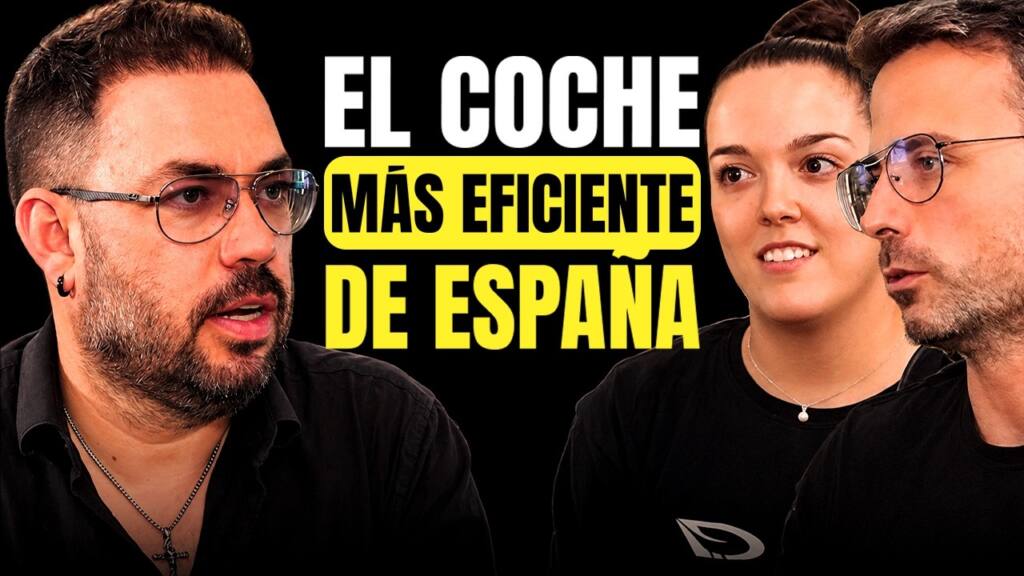
The automation of hydroponic farming combines sensors, control systems, machine vision, and software to monitor agricultural production under specific conditions. Víctor Cantón, CEO of Enkitek, explains how to apply these tools while keeping an eye on energy, labor, and the differences between various installations. In chapter 28 of “Toque de Ingenio,” the conversation with Edgar Guerrero connects hydroponic agriculture with common issues in engineering and industrial automation.
Guest: Víctor Cantón, CEO of Enkitek.
Interview published: November 18, 2024. Episode: 28. Duration: 1 h 30 min.
In this episode:
- What is hydroponics, and why does controlling the environment not eliminate production costs?
- How to integrate cameras and sensors to dedicate human tasks to specific activities.
- Why local control, connectivity, and robot adaptation are key to finding a solution.
This episode presents Enkitek’s vision and developments for November 2024. It includes examples of monitoring and automation, as well as the commercial challenges facing a sector with highly diverse installations. The possibilities described should be understood within that context, not as universal features of any automated farm.
What is hydroponics, and what variables does it require to control?
Hydroponics allows for growing plants without using soil as a nutrient-providing medium. Víctor describes systems where the roots receive water, oxygen, and nutrients through a controlled solution. This approach opens up possibilities where fertile soil is not available, or where it’s desirable to organize production in a different way.
The conversation highlights the recirculation of water and the potential to bring certain crops closer to consumers. However, these advantages depend on the design of the installation, the crop being grown, and how the system is managed. The interview also addresses its disadvantages.
From engineering, the key is to identify which variables need to be maintained within specific working conditions, and how to detect any deviations. The agricultural environment introduces observation, action, and ongoing monitoring requirements that are similar to those found in other production processes, although the biological nature adds its own specific characteristics.
That necessitates studying the cultivation process before selecting technology. A camera or sensor makes sense when they allow you to answer a relevant question related to production. Simply installing more devices doesn’t guarantee that the information obtained will lead to better decisions.
Hydroponic crop automation and operating costs.
Víctor highlights two key limitations: energy and labor. Artificial lighting and climate control can represent a significant expense, while the handling of plants and harvesting don’t always find a mechanically standardized solution as is common in other agricultural settings.
The type of crop and its location alter the equation. The discussion compares situations where it makes sense to bring production closer to a market, with others where conventional production is already highly competitive. There’s no suggestion of automatically replacing all crops with vertical farms.
There’s also a challenge with integration: each installation can have a different layout. The supports, corridors, and variations all influence the movement of machinery and people. A solution that works on one farm may require significant modifications on another.
For a company that is studying Industrial automation, This case highlights the importance of defining the process and measuring where time is spent. The investment should be linked to a specific task, a quality issue, or a clear need for capacity, with well-defined operating conditions.
Machine vision for crop monitoring.
Enkitek proposes using cameras to reduce the amount of repetitive observation work. Víctor outlines an approach involving fixed RGB cameras and discusses the relationship between coverage, cost, and detection capabilities. The selection of a more sophisticated technology should be justified by the benefits it provides to the application.
Comparing the problem to human observation helps us understand it: a person walks through the installation to check for any issues. A vision system can assist in identifying where intervention is most beneficial, provided that what is observed and how the signals are interpreted have been clearly defined.
Víctor describes the aim of directing the worker’s time towards:
“specific tasks”.
Víctor Cantón 44:25.
Detection does not replace agronomic decision-making on its own, nor does it resolve any anomalies. It’s part of a workflow: observing, identifying a potential problem, notifying, and taking action. It’s also important to consider how we verify that the alerts are useful, and what happens when a situation falls outside of the known examples.
In an industrial machine vision application, a similar situation arises. The camera is part of the system; the lighting, positioning, data, and acceptance criteria all determine whether the solution effectively addresses the actual problem.
Sensors, connectivity, and local control.
One of the most concrete lessons from the episode is the shift towards a hybrid architecture. Víctor explains that an initial proposal, heavily reliant on the cloud, had to take into account the actual conditions of the farms – variable connections, remote locations, and supply issues.
The proposed solution involves a local controller that can manage the process, and a connected platform for visualizing information. Consequently, losing internet connection does not necessarily mean losing control over the local process. The system can also detect a lack of communication and generate alerts.
The priority can be summarized as:
“The farm cannot stop functioning, despite losing internet access”.
Víctor Cantón 50:22.
This episode doesn’t present the architecture as a guarantee against any failures. It demonstrates a design decision based on usage conditions. Electronic engineering and connected systems, Defining what should function locally and what can rely on a connection helps to distribute responsibilities and manage issues.
Adaptable robotization for various environments.
Víctor explains that some harvesting solutions are linked to very specific greenhouse configurations or particular varieties. During the conversation, he recalls the limitations he encountered when studying equipment designed for typical infrastructures in other countries.
In response to that rigidity, I propose a framework that separates the different components of the system: the robot’s behavior, the detection methods using models, and the selection of the arm based on the application. This involves mentioning ROS and behavior trees as part of this technological structure.
The lesson is about identifying which elements can be reused and which require adaptation. Changing the form, the geometry, or the installation shouldn’t be seen as simply replacing names. It can introduce new requirements for perception, manipulation, and access.
El Functional prototyping It allows you to compare those conditions before extending the solution. For an application involving manipulation, it’s important to observe the actual object, its variations, and the points of contact. Robustness depends on what happens in typical cases, as well as in those that deviate from the ideal.
Questions about sensors and agricultural automation
What can machine vision contribute to a hydroponic growing system?
It can help monitor areas of the facility and flag situations that need review. Its usefulness depends on image conditions, available data and the problems to be detected. Enkitek describes a monitoring approach based on cameras and software.
Why is it important to maintain local control?
Because a productive installation may lose internet connectivity. The case describes a local controller combined with a connected platform. This separation allows you to define which functions should continue and how to alert about a communication issue.
Can the same robot be used on any large farm?
The interview reveals that the installation’s geometry and the cultivation method are important. Repurposing requires identifying which modules are common and which parts need to be adapted. A project should validate the handling and detection within the specific working conditions.
Four key learnings for automating a variable process.
- Studying the crop, the installation process, and associated costs before choosing equipment.
- Connect each piece of information or alert with an operational decision.
- Separate local control and connected services based on the needs for business continuity.
- Verify which parts of a robotic solution can be reused across different applications.
At i-mas, industrial automation and machine vision are approached based on the process itself, its variations, and the specific needs of the company. If you would like to examine a particular inspection or manipulation task, you can Please explain how it currently works. To define the project’s requirements.
To continue reading: Machine vision to verify delivery orders using Bronze Tracker..
Source of article: Interview with Edgar Guerrero and Víctor Cantón on Toque de Ingenio, published on November 18, 2024. The quotes link to the original conversation; the criteria applicable to other processes is a summarised editorial version.