Hardly anyone asks how much it costs to develop a product without asking, straight afterwards, how long it takes. And the answer matters more than it seems: the timeline decides which trade fair you make it to, which sales campaign you can prepare and when the investment starts paying anything back.
The honest answer is that there is no standard timeline, but there are reasonable ranges. An industrial product of medium complexity with electronics is rarely developed in less than nine to twelve months from brief to first production run, and eighteen is a perfectly normal figure. In this article we break down product development timelines phase by phase, what really delays them and what can be compressed without taking on more risk.
Why there is no single timeline
Two products that look alike from the outside can have very different schedules. What makes the difference is almost always the same:
- Actual complexity: number of parts, mechanisms, custom electronics and associated software.
- Regulatory demands: a consumer product is not the same as a medical, ATEX or automotive one.
- Expected volume: making five hundred units or fifty thousand leads to processes and tooling with very different lead times.
- How mature the starting point is: a closed brief and someone able to make decisions can save months.
That is why it pays to close the scope before setting dates. A proper technical and market viability study at the start does not delay the project: it organises it.
Definition and viability: 3 to 6 weeks
This is the shortest phase and the one that influences all the others the most. It sets out what the product has to do, for whom, at what target cost, at what volume and under which regulations. The state of the art is reviewed, unworkable routes are ruled out and the criteria for deciding that the product works are defined.
Skipping this phase to save time is the origin of most later delays. Whatever is not decided here gets decided later, when changing it costs ten times more.
Concept and detail design: 2 to 4 months
This covers generating concepts, selecting one and developing it fully: mechanics, electronics and firmware, interface and styling. It is the phase with the most iterations and therefore the one most sensitive to how fast the client responds.
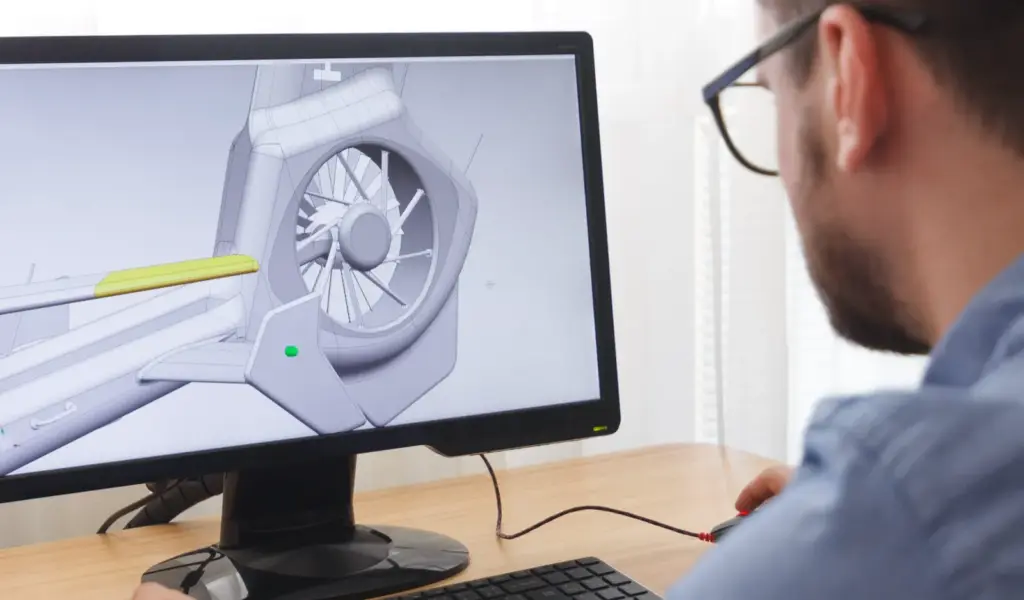
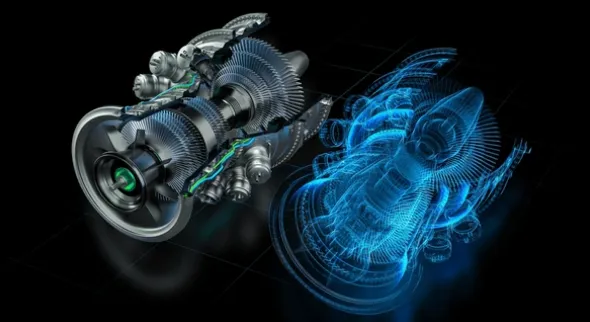
A good part of that time can be cut by validating digitally before manufacturing anything. Simulations, renderings and augmented reality make it possible to rule out options in days rather than weeks.
Prototyping and validation: 1 to 3 months
This is where the product stops being a file. Functional prototypes are built, tested with real users and corrected. The norm is not one round but two or three, and each one includes manufacturing, testing and redesign.
The timeline depends heavily on the prototyping technology chosen and on whether testing is done with ideal samples or under real conditions of use. Validating only with the best-case scenario shortens this phase and lengthens every phase after it.
Industrialisation and tooling: 3 to 6 months
This is the phase that surprises people who have not been through it. Adapting the design to the process, selecting a supplier, making moulds or tooling and fine-tuning the first parts takes months, and much of that time does not depend on engineering but on the workshop: an injection mould has its own lead time and meetings do not speed it up.
It is also where design mistakes that did not take production into account get paid for. A change here can mean modifying a mould that has already been made. That is why the move from prototype to production is prepared long before you get to it.
Certification and pre-production run: 1 to 4 months
Tests, reports, corrections and, if something fails, repetition. Laboratories have their own calendars and, in peak season, getting a slot can take weeks. If the product is medical or heading for markets outside the European Union, the timeline multiplies.
The classic mistake is leaving certification until the end. When the testing requirements are known from the design stage, this phase becomes a long but predictable formality; when they are not, it becomes a redesign. The same goes for the test plan: the sooner it is defined, the fewer surprises appear.
What really delays a product development project
In our experience, delays almost never come from engineering taking longer than planned. They come from other things:
- Decisions that never arrive. A validation left pending for two weeks delays the project by two weeks, and it usually happens several times.
- A brief that keeps moving. Adding a feature halfway through does not add the time of that feature: it forces a review of everything already done.
- Choosing the supplier late. The manufacturing process shapes the design; deciding it at the end means redoing part of the work.
- Validating only with the ideal case. The failures that do not show up in the prototype show up in the pre-production run, which is the worst possible moment.
- Changes after the tooling. It is the most expensive delay of all and it almost always originates in an earlier phase that was never properly closed.
It is the same pattern we described in the critical mistakes that ruin a hardware development project: the problem is rarely technical.
How to shorten timelines without taking on more risk
There is real room for improvement, but it does not come from pushing anyone harder:
- Overlap the phases that allow it. Supplier selection and detail design can run in parallel.
- Freeze requirements at an agreed point. And treat any later change for what it is: a decision with a cost and a timeline.
- Appoint a contact person who can make decisions. It is the measure that saves the most time and costs the least.
- Use temporary tooling for the first batch. It lets you start selling while the final tooling is being made.
- Ask for the timeline broken down by phase. A calendar with milestones and acceptance criteria is a control tool; a single end date is not.
Product development at I-MAS
At i-mas we approach product design and development end to end, from definition and prototyping through to industrialisation and production, bringing mechanics, electronics, software and industrial design together under one engineering roof. Working with a single point of contact removes much of the waiting that happens when every phase depends on a different supplier, and it makes it possible to anticipate at the design stage what would otherwise turn up on the factory floor.
Would you like to know more about our services? Get in touch with us or take a look at our projects!