
To learn more about this vision, we interviewed our UX/UI experts, Jordi and Gloria, drawing on their experience to learn about current trends and better understand how they approach their work in designing experiences and interfaces. Keep reading!
What do you think are the most relevant current trends in UX/UI design?
The most relevant trends in UX/UI design focus on accessibility and inclusion, with an emphasis on minimalist yet functional interfaces. Subtle animations enhance the user experience, while personalization becomes a key factor. AI-driven adaptive design and the use of 3D illustrations create more immersive and personalized experiences. In addition, voice interfaces and advanced responsive design are becoming essential to adapt to the growing use of different devices.
How do you balance creativity with functionality in your designs?
To balance creativity with functionality in our designs, we begin by exploring innovative solutions, searching for references that can bring freshness and visual appeal, without losing sight of ease of use and the project’s objectives. We incorporate creative elements that enhance the user experience, but always evaluate their impact on navigation and efficiency.
The key is to experiment and then test those ideas, making adjustments as necessary to maintain harmony between aesthetics and practicality, so that the design not only looks good, but also works smoothly and effectively.
Can you share an example of a project where a good user experience made a difference?
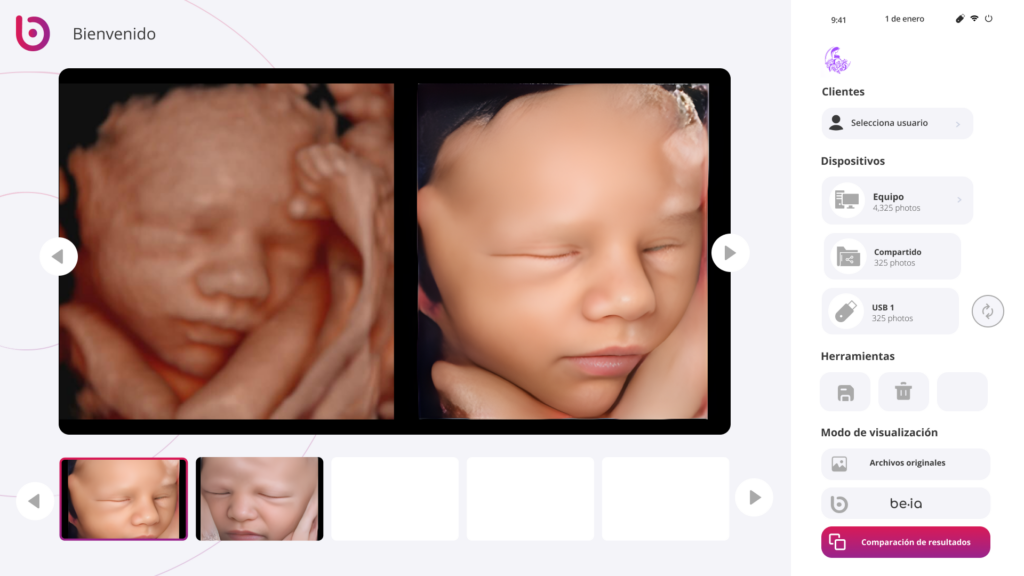
In a recent project, we collaborated on the creation and development of the visual identity and user interface for be·ia, the biggest technological disruption in the field of emotional ultrasound and obstetrics. Our main focus was to achieve an exceptional user experience, leveraging innovation and artificial intelligence to generate hyper-realistic images of babies in the womb.
We began with a detailed branding study, including analysis of naming, typography, and color palette, in order to build a unified and consistent image that would effectively reflect the product’s values. Together with the client, we established key premises to ensure that the brand identity not only aligned with market expectations, but also conveyed strength and personality.
The user interface was carefully designed to facilitate interaction with be·ia technology. We conducted interviews with potential users to adjust the layout of elements and interface navigation, ensuring an intuitive and fluid experience. In addition, we integrated recognizable visual elements based on common patterns found in modern applications, reinforcing the user’s emotional connection with the product.
This approach, focused on user experience and brand identity, allowed us to develop a consistent, easy-to-use interface that was aligned with both customer expectations and end-user needs.
What role does user research play in the design process?
User research is essential in the design process, as it provides a deep understanding of the needs, behaviors, and expectations of end users. This guides us to make better decisions at each stage of the process, ensuring that what we design is useful, easy to use, and truly responds to what users want. Ultimately, focusing the design on users guarantees a more satisfying experience and increases the chances of the product’s success.
How do you handle the differences between customer expectations and the actual needs of the end user?
To manage the differences between customer expectations and the actual needs of the end user, it is crucial to maintain open, data-driven communication from the outset. By involving the customer in user research, we share key points that demonstrate why certain design decisions are better aligned with users’ interests. By presenting prototypes and conducting usability tests, we show how user needs influence design and how meeting those needs can also fulfill the client’s objectives. This helps build a common understanding and find a balance that benefits both parties.
How do you ensure that a design is intuitive and easy to use?
To ensure that a design is intuitive and easy to use, we start by understanding users through research, which allows us to create simple, clear, and consistent interfaces. We use visual hierarchy to guide navigation and maintain consistency in design elements. We conduct various usability tests with real users to detect problems and adjust the design, and we develop prototypes to iterate based on feedback.
What are the biggest challenges you face when working on UX/UI projects?
The biggest challenges in UX/UI projects are often understanding what users really need and how they behave, balancing what stakeholders want with what is possible in terms of technology and resources, and keeping the design simple and easy to use without losing functionality.
i-mas, your partner in Product Design and Impactful Experiences
At i-mas, our passion for UX/UI drives us to continue researching, iterating, and improving with each project to ensure that what we create meets our clients’ expectations and offers a unique and memorable experience.