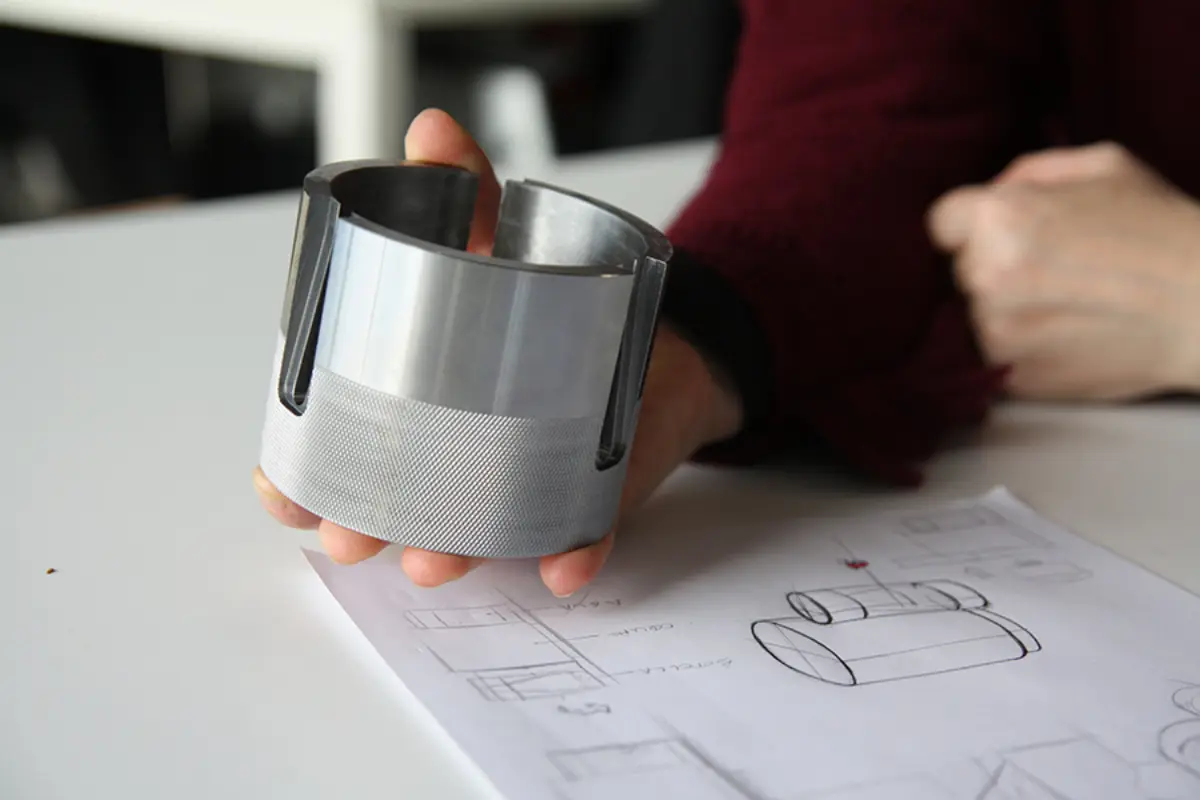
How do I create a prototype for my product?
With a 3D model of the part and one of these three technologies: CNC machining on aluminum, steel, or technical plastics; silicone vacuum casting for resin and polyurethane parts; or industrial Multi Jet Fusion (MJF) 3D printing in polyamide. PROTO&GO!, i-mas’ prototyping division, offers all three with colored and surface finishes.
How long does it take to create a prototype?
With a specialist supplier, within days. At PROTO&GO!, the offer arrives in under 24 hours and the parts in 8 days, with express courier delivery to any point in the world. This timeframe is possible because a proprietary software eliminates unnecessary steps between the online request and the machine.
Which do I choose for a prototype: CNC machining, 3D printing, or silicone mold?
CNC when you need the same material as the final part and dimensional accuracy. MJF 3D printing when the geometry is complex and you want the part quickly and robustly in polyamide. Silicone molds when you need a small series in resin, with an injection-like appearance, before investing in the definitive mold. At PROTO&GO!, we’ll let you know when we see the file.
How much does a prototype cost, and how do I request a quote?
The cost depends on the size of the part, the material used, the technology involved, and the quantity required. Within PROTO&GO!, you upload the 3D file along with the quantity, material, and finish details, and you receive a quote within less than 24 hours. If the prototype is part of a project with i-mas, the project team handles its management.
Can a prototype have the same finish as the final product?
Yes. Specify the colour – RAL and Pantone – in gloss, matte, or satin finishes, and surface finishes: anodized, frosted, polished, patterned, galvanized, chrome-plated, or nickel-plated. In PROTO&GO!, the prototype is produced with the appearance of the final product, not just its shape, which is useful for presenting it to clients or investors.
Does a functional prototype serve as a basis for mass production?
If it’s machined using the same material as the final piece, then: verify the design and the machining program already exists. In the i-mas group, the CNC machining workshop produces the small series using the same programs as the prototype, without needing to start from scratch with another supplier.