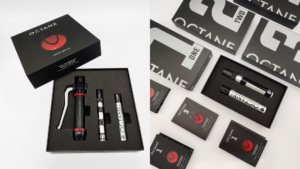
A rendering can showcase an attractive, cohesive product that appears ready for presentation. It can help sell an idea, attract investment, or get a team on the same page during the early stages of development. But a rendering doesn’t manufacture, assemble, account for tolerances, dissipate heat, or determine on its own how each part will be produced. In product design, one of the most important differences between a good image and a good product lies in the ability to turn that visual concept into a manufacturable, functional, and viable solution in actual production.
When the design doesn’t take product manufacturing into account from the outset, many problems don’t surface until it’s too late: during prototyping, assembly, technical validation, or even during the first production run. And by that point, fixing them is usually slower, more expensive, and more complicated.
A rendering does not always represent a manufacturable product
Rendering is a very useful tool in product development. It allows you to visualize volumes, materials, finishes, proportions, colors, and the user experience before anything is manufactured. It also helps convey an idea more effectively to clients, investors, or internal teams.
The problem arises when the rendering is treated as if it were already a finished product.
A design may look perfect on screen, but it can hide radii that are impossible to manufacture, parts that are too thin, weak joints, difficult-to-access areas, unrealistic wall thicknesses, or geometries that require excessively expensive manufacturing processes.
It may also be the case that the product was designed with only its external appearance in mind, without considering how it will be assembled, how the electronics will be integrated, how the internal components will be accessed, or how it will be maintained over time.
That is why, in an industrial design project, aesthetics must always go hand in hand with engineering, materials, production processes, and functional requirements.
Common product design mistakes that occur when manufacturing isn’t taken into account
One of the most common mistakes is designing parts without a clear understanding of the manufacturing process. Designing for 3D printing, CNC machining, plastic injection molding, sheet metal fabrication, thermoforming, or silicone mold manufacturing is not the same.
Each process has its own limitations, costs, and design rules. A wall thickness that works well for a machined part may not be suitable for an injection-molded part. A geometry that is feasible in 3D printing may prove unfeasible or too expensive if the part is to be mass-produced.
Another common mistake is failing to account for tolerances. In a rendering, all the parts fit together perfectly. In production, however, each component has dimensional deviations, clearances, deformations, and material variations. If these tolerances are not taken into account, problems such as assembly issues, friction, vibrations, leaks, misalignments, or parts that simply do not fit together can arise.
It is also common to design products with too many parts, too many screws, or illogical assembly sequences. This increases assembly time, raises the cost per unit, and multiplies the risk of errors during production.
Sometimes, the problem isn’t a single decision, but rather the accumulation of many small decisions made without a broader perspective: a cover that’s hard to open, a poorly placed connector, a cable with insufficient clearance, an inaccessible battery, a case with inadequate ventilation, or a material that doesn’t hold up well under real-world conditions.
The True Cost of Late Redesign in Industrial Product Development
Detecting these issues late can jeopardize the entire launch schedule. If a problem arises during the prototype phase, it can still be corrected with some leeway. But if it arises after molds, tooling, components, or initial production runs have already been ordered, the impact can be much greater.
A small change to a housing can require modifying drawings, updating 3D files, re-running prototypes, switching suppliers, repeating tests, or adjusting related parts. In electronic products, a mechanical modification can also affect circuit boards, connectors, antennas, batteries, wiring, or heat dissipation.
That’s why designing with production in mind doesn’t mean limiting creativity. It means making decisions with a broader perspective: not only what form the product will take, but also how it will be manufactured, how it will be assembled, how much it will cost, how it will be validated, and what risks it may pose in the future.
Industrial design, engineering, and production must move forward together
To avoid these mistakes, product development must involve professionals in industrial design, mechanical engineering, electronics, prototyping, manufacturing, and assembly from the very beginning.
This approach allows us to identify critical issues earlier and make better decisions. For example, we can simplify a part’s geometry to reduce machining costs, redesign a housing to facilitate injection molding, improve access to internal components, reduce the number of parts, or develop a faster and more repeatable assembly system.
It also allows for the product to be validated in stages: first at the conceptual level, then through 3D models, functional prototypes, assembly tests, usability tests, and manufacturing-oriented adjustments.
The goal is not just to create an attractive product, but to develop a solution that can move from concept to production with less uncertainty.
I-MAS: Industrial design in Barcelona, integrated with engineering and manufacturing
At I-MAS, we integrate industrial design, engineering, electronics, prototyping, manufacturing, and assembly from the earliest stages of the project. This approach allows us to identify conflicts between aesthetics, functionality, and production earlier on, thereby reducing errors before reaching the prototype or first production run.
We work with companies and startups that need to turn an idea, a rendering, or an initial concept into a viable, manufacturable, and market-ready industrial product.
Are you looking for a company specializing in product design and development in Barcelona? Contact us and take the first step toward turning your idea into a viable product.